


Lithium-ion batteries are not a single, uniform product, but rather a vast and diverse family. Depending on the classification criteria, their performance, cost, and suitable applications can vary dramatically.In our previous articles, we touched upon different battery types such as pouch, cylindrical, and solid-state cells. This article will systematically break down the four major dimensions of Li-ion battery classification, providing a detailed analysis of the core characteristics and primary application scenarios for each type.
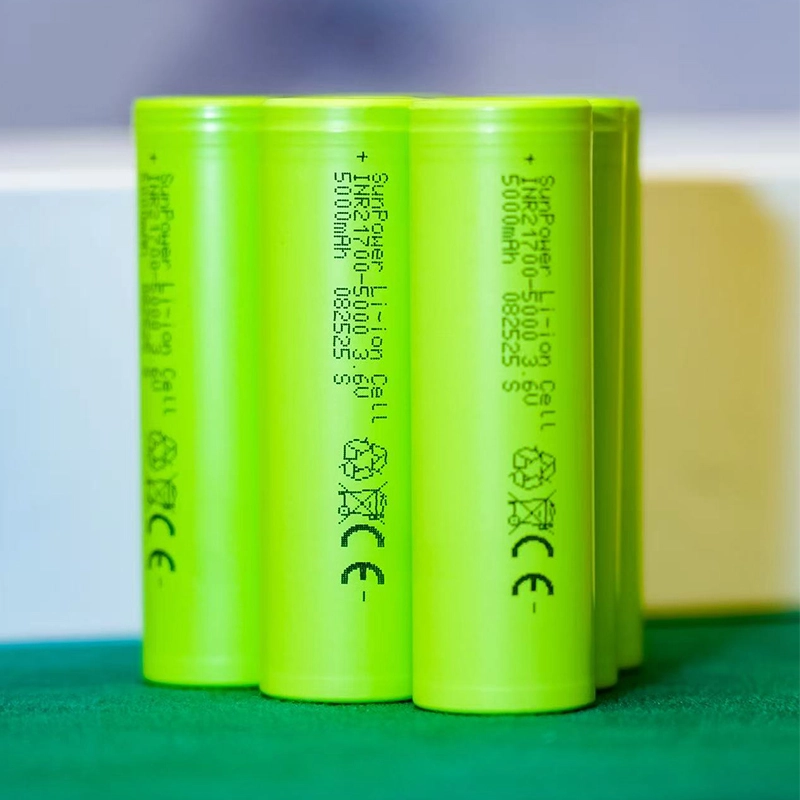
- Characteristics: These batteries feature mature technology, stable production processes, high yield rates, and excellent consistency, making them highly suitable for mass production. Encased in steel or aluminum shells, they offer high mechanical strength. However, their fixed shape creates gaps between cells when assembled into packs, resulting in lower space utilization.
- Primary Applications: Power tools, laptops, electric vehicles (EVs), and energy storage systems.
- Suitability for Drones: ✅ Suitable. They are primarily used in long-endurance fixed-wing drones, surveying and mapping drones, and other scenarios where strict range requirements exist, but flexibility in shape is less critical.
- Characteristics: Prismatic batteries feature a simple structure, reliable packaging, high system assembly efficiency, and relatively high energy density per cell. They offer a high degree of customization and excellent impact resistance. However, the large size of individual cells makes them unsuitable for low-capacity applications. They also face challenges in standardizing production processes and suffer from relatively poor heat dissipation.
- Primary Applications: Electric vehicles (EVs), energy storage systems, etc.
- Suitability for Drones: Rarely used. The application of prismatic batteries in drones is quite limited. This is mainly because the cells are large, have a fixed shape, and incur high customization costs, making them far less flexible than pouch batteries.
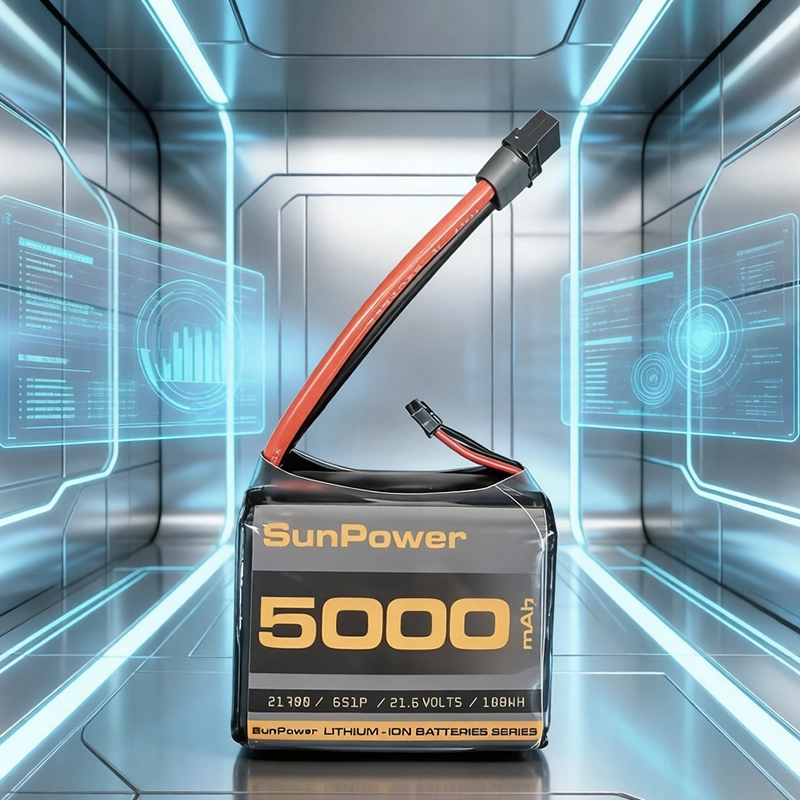
- Characteristics: LiPo batteries boast the highest energy density, are the lightest in weight, feature low internal resistance, and offer highly flexible and customizable designs. However, they tend to have poorer consistency, lower production efficiency, more complex manufacturing processes, and higher costs.
- Primary Applications: Smartphones, drones, wearable devices, etc.
- Suitability for Drones: Most commonly used. Thanks to their three major advantages—high energy density, lightweight construction, and shape flexibility—LiPo batteries have become the mainstream choice for both consumer and industrial drones.
- Characteristics: Features high energy density, mature manufacturing processes, and excellent cycling performance. However, cobalt is expensive, the lifespan is relatively short, and it has not been widely adopted in the power battery sector.
- Primary Applications: 3C consumer electronics like mobile phones and laptops.
- Suitability for Drones: Usable. Its rate capability and energy density meet the requirements, but the price is on the higher side.
- Characteristics: Offers exceptional thermal stability (thermal runaway temperature exceeds 500℃), a long cycle life (over 3000 cycles), and low cost, but suffers from lower energy density (90-170 Wh/kg).
- Primary Applications: Electric vehicles, energy storage systems, and start-stop batteries.
- Suitability for Drones: Rarely used. The energy density is too low for most drone applications.
- Characteristics: Composed of Nickel (Ni), Cobalt (Co), and Manganese (Mn) / Aluminum (Al), offering high energy density (200-300 Wh/kg). Increasing nickel content is a current R&D hotspot, but this comes with poorer thermal stability, with a thermal runaway temperature of only around 200℃.
- Primary Applications: Electric vehicles, eVTOLs, and high-performance equipment.
- Suitability for Drones: Suitable. It offers high energy density at a reasonable price.
- Characteristics: Utilize liquid organic electrolytes, offering high energy density and representing the most mature technological route currently available. However, they carry risks of electrolyte leakage and thermal runaway.
- Primary Applications: The vast majority of commercially available lithium batteries (including pouch, cylindrical, and prismatic cells).
- Suitability for Drones: Mainstream. Almost all drone batteries on the market today are liquid lithium-ion batteries.
- Characteristics: Replace liquid electrolytes and separators with solid electrolytes, significantly boosting energy density (theoretical values exceeding 500 Wh/kg). Based on the solid electrolyte material, there are three main technical routes:
- Sulfide Route: Boasts the highest ionic conductivity (reaching the 10⁻² S/cm range) and a high performance ceiling, making it a key direction for all-solid-state batteries. However, it suffers from poor safety margins: the material itself has moderate thermal stability (thermal runaway temperature around 200-300℃), but extremely poor chemical stability. It reacts instantly with moisture to produce highly toxic hydrogen sulfide (H₂S) gas. Therefore, it has extremely strict requirements for the production environment (dry rooms) and packaging. If the casing is breached and exposed to air or moisture, it can rapidly fail or even catch fire.
- Oxide Route: Offers exceptional thermal stability (withstanding temperatures above 600℃). It is non-flammable, non-gassing, and leak-proof, making it the route with the highest intrinsic safety among the three. It has already been successfully deployed and verified in the semi-solid-state market.
- Polymer Route: Highly process-friendly with excellent compatibility with existing liquid battery production lines, allowing for rapid industrialization. It offers good flexibility and is resistant to rupture and leakage. However, it still contains a small amount of liquid plasticizer, which may ignite under extreme overheating. Its thermal stability falls between that of oxides and liquid batteries.
- Primary Applications: High-end eVTOLs, specialized industrial drones, and next-generation electric vehicles.
- Suitability for Drones: Huge potential. Semi-solid-state batteries have already entered the drone market, with energy densities ranging from 280 to 350 Wh/kg.
Solid-state batteries are widely recognized as the core direction for next-generation battery technology, with their potential for high energy density and superior safety generating great anticipation. However, constrained by bottlenecks in materials, manufacturing processes, and cost, there is still a significant gap before large-scale mass production and application can be achieved. During this transition period, semi-solid-state batteries—as an “intermediate form” that balances performance with feasibility—are expected to hold a prominent position for a considerable time.
As an alternative to lithium-ion batteries in lower-end applications, sodium-ion batteries are steadily increasing their commercial penetration in fields like energy storage and low-speed transportation. In the future, a significant rise in the price of lithium carbonate would further incentivize companies to ramp up the development of sodium-ion batteries.
As drone application scenarios become increasingly segmented, battery solutions are evolving from “general-purpose” to “scenario-specific.” For instance, polar scientific expeditions require wide-temperature-range batteries, logistics delivery demands long-cycle-life batteries, and emergency rescue missions call for highly safe solid-state batteries. The collaborative, optimized design between batteries and the drone airframe is becoming the new competitive frontier in the industry.
There is no “universal” battery, only the battery that is “most suitable for the scenario.” For every practitioner and enthusiast, understanding the logic behind battery classification lays the most solid foundation for smarter selection, safer usage, and more forward-looking innovation.