


Despite both being DJI products, consumer drones and dozens-of-kilograms heavy-lift drones have adopted two completely different battery technology roadmaps: while small consumer drones still adhere to the Lithium Cobalt Oxide (LCO) system, medium and large enterprise drones have long since transitioned to Nickel-Cobalt-Manganese (NCM) chemistry. Why is this the case?
Ⅰ. Performance Differences Between Large and Small Batteries
First, let’s take a look at two sets of battery specifications from DJI’s official sources.
Representative Consumer Drone: DJI Mini 5 Pro
- Battery Capacity & Weight: Features a 2788mAh capacity with a nominal voltage of 7V, delivering 19.52Wh of energy. It is incredibly lightweight at just 71.2g.
- Charging & Chemistry: The charge limit voltage is 8.6V, corresponding to a 4.3V high-voltage system per cell, utilizing Lithium Cobalt Oxide (LiCoO₂) as the cathode material.
- Performance: With a maximum continuous discharge rate of 25C, it supports rapid acceleration, wind resistance, and instantaneous high-torque output, enabling a hover time of 34 minutes.

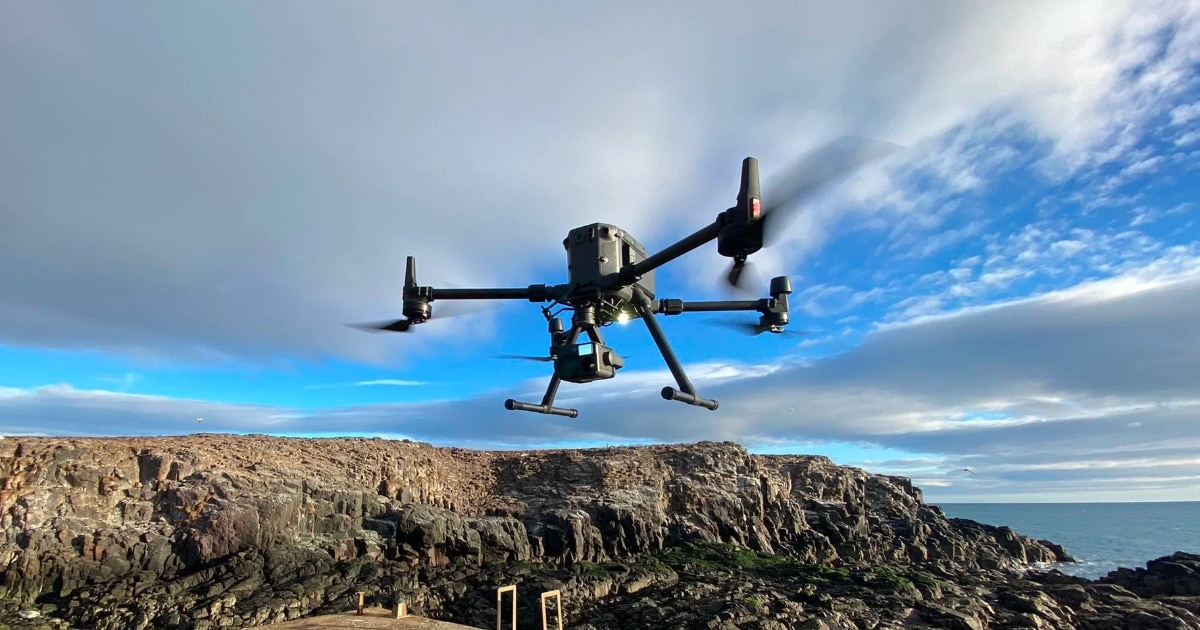
Representative Mid-sized Drone: DJI M300 RTK
- Battery Specs: Equipped with the TB60 Intelligent Flight Battery, featuring a capacity of 5935mAh, a nominal voltage of 22.8V, and a weight of nearly 1kg per unit.
- Chemistry & Endurance: Utilizes NCM (Nickel-Cobalt-Manganese) ternary cathode material with a continuous discharge rate of 12C. A dual-battery setup delivers a maximum flight time of up to 55 minutes.
- Durability: Boasts a cycle life far exceeding that of consumer-grade batteries, capable of supporting high-frequency industrial operations such as plant protection and inspection.
The difference between these two batteries goes far beyond just their physical size. The core distinction lies in the cathode material—the key component that determines the performance ceiling of a lithium battery.
Industry data reveals a clear trend:For small consumer drones weighing under 2kg, Lithium Cobalt Oxide (LiCoO₂) remains the mainstream choice.However, for medium and large drones with a takeoff weight exceeding 2kg, the penetration rate of NCM ternary materials has far surpassed that of Lithium Cobalt Oxide.
Ⅱ. Lithium Cobalt Oxide vs. NCM: Which is Truly Better for Drones?
We’re going to break down the suitability differences between LiCoO₂ and NCM materials from two critical dimensions: performance and cost.
1. Performance Dimension: Requirement Priorities Determine the Material’s Ceiling
The core requirements for drone batteries essentially boil down to four key points: rate capability, energy density, cycle life, and safety. However, the ranking of importance for these four factors differs completely between small and large drones.
- Rate Capability: The Need for Speed Small drones face strict weight limits and utilize small propellers. To achieve stable takeoffs/landings, resist wind, and perform rapid braking, they must rely on the battery’s ability to deliver instantaneous high current. In daily flight, pulse discharges of 10-25C are the norm, and extreme scenarios may even require peak discharges exceeding 30C. Lithium Cobalt Oxide (LiCoO₂) is the clear winner in rate capability. The lithium-ion diffusion coefficient in LiCoO₂ can reach 1×10⁻⁹ cm²/s, which is 10 times higher than that of conventional NCM523 materials. This means that with the same electrode area density design, LiCoO₂ cells exhibit lower polarization and lower temperature rise, resulting in rate performance that is superior to ternary materials. For small drones, capacity retention under high C-rates directly dictates flight stability and maximum range.
- Energy Density: Small drones have extremely limited fuselage space, making them far more sensitive to volumetric energy density than gravimetric energy density. The compaction density of Lithium Cobalt Oxide can reach 4.0-4.15 g/cm³, far exceeding the 3.4-3.6 g/cm³ of ternary materials. Its volumetric energy density can reach 700 Wh/L, which is over 15% higher than conventional ternary materials. Simply put, in the same cramped battery compartment, LiCoO₂ can pack in more power—an irreplaceable advantage for consumer drones with a strict 249g weight limit. However, medium and large industrial drones have ample fuselage space for battery layout and prioritize “how much power per unit of weight.” Here, the advantage of ternary materials’ specific capacity becomes glaringly obvious. While conventional Lithium Cobalt Oxide offers a specific capacity of 140-155 mAh/g, ternary materials significantly outperform it: NCM523 reaches 165 mAh/g. NCM622 achieves 175 mAh/g. Current high-voltage NCM613 can even hit 190 mAh/g.
This means that for cells of the same weight, ternary materials deliver a 15-20% boost in power, directly translating to longer flight times and greater payload capacity. For industrial scenarios like plant protection, inspection, and logistics, an extra 10 minutes of flight time translates to a 20% increase in single-mission coverage area—a truly disruptive improvement in operational efficiency.
2. Cost Dimension: Cobalt Price Volatility, the Key Driver Behind Diverging Paths
Lithium Cobalt Oxide (LiCoO₂) contains over 60% cobalt by mass, whereas current ternary materials typically have a cobalt content of less than 10%. Cobalt is a scarce global strategic resource with extreme price volatility. During the price surges of 2017-2018 and 2020, the price per ton of LiCoO₂ once broke through 82,000$, while the cost fluctuation for ternary materials was far less severe. For consumer drones, the small amount of battery cells used means the incremental cost from rising cobalt prices can be absorbed. However, medium and large industrial drones require dozens of times more cells than consumer models, making them highly sensitive to cost. Taking a plant protection drone with a 20kg payload as an example: with a battery capacity of approximately 5kWh, the material cost difference between LiCoO₂ and NCM523 can reach thousands.
Furthermore, the longer cycle life of ternary materials significantly reduces the Total Cost of Ownership (TCO). For industrial users, reduced battery replacement frequency directly translates to lower equipment maintenance and operational costs.
Therefore, with the continuous breakthroughs and updates in ternary material (NCM) battery technology, it has been widely applied in the field of drone batteries. Defond has been deeply engaged in ternary material batteries, boasting over 10 years of independent R&D experience, and has long ranked among the industry leaders in 18650 and 21700 series battery products, we make sure that you would satisfy with our battery products, and the customize demands of battery pack and BMS board.
