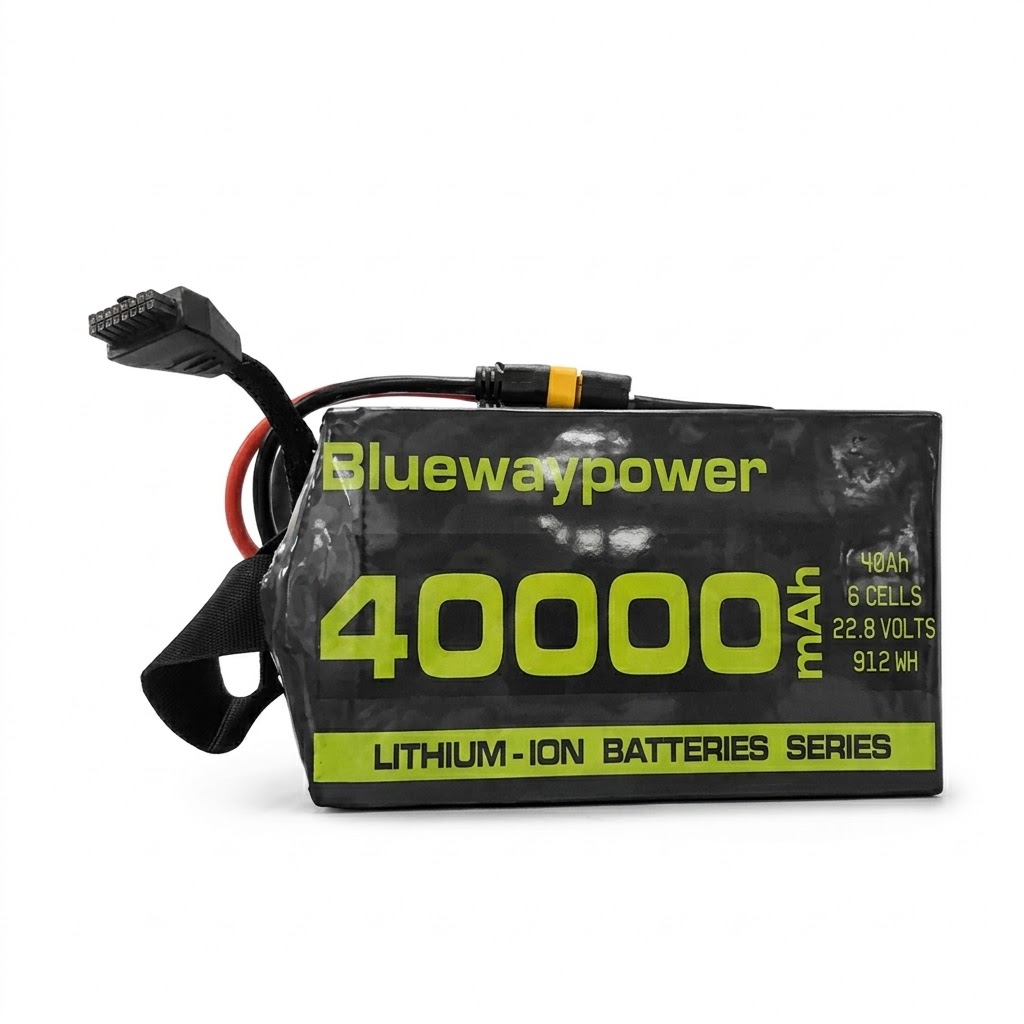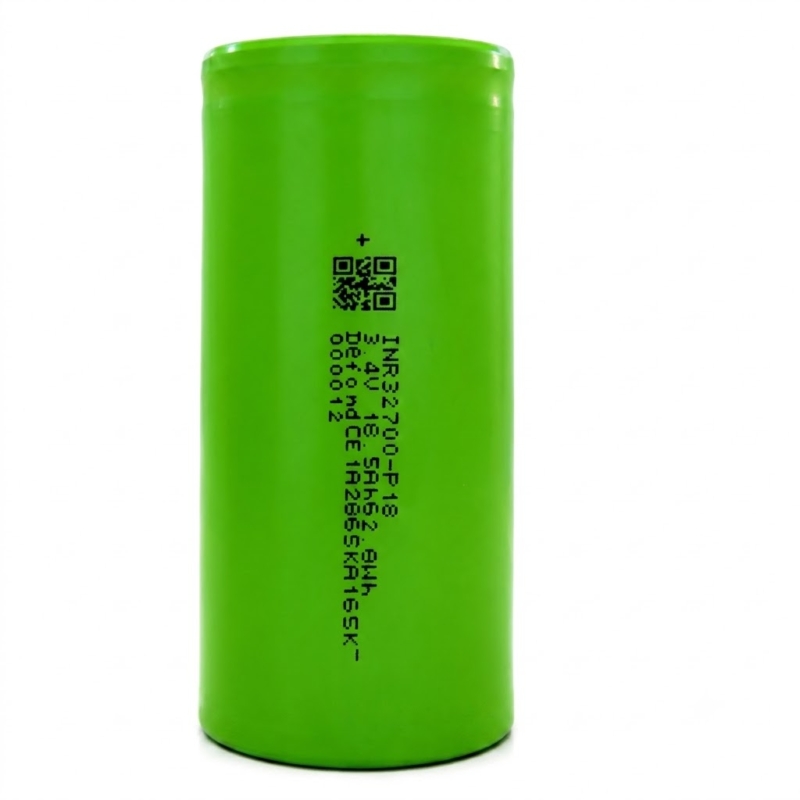

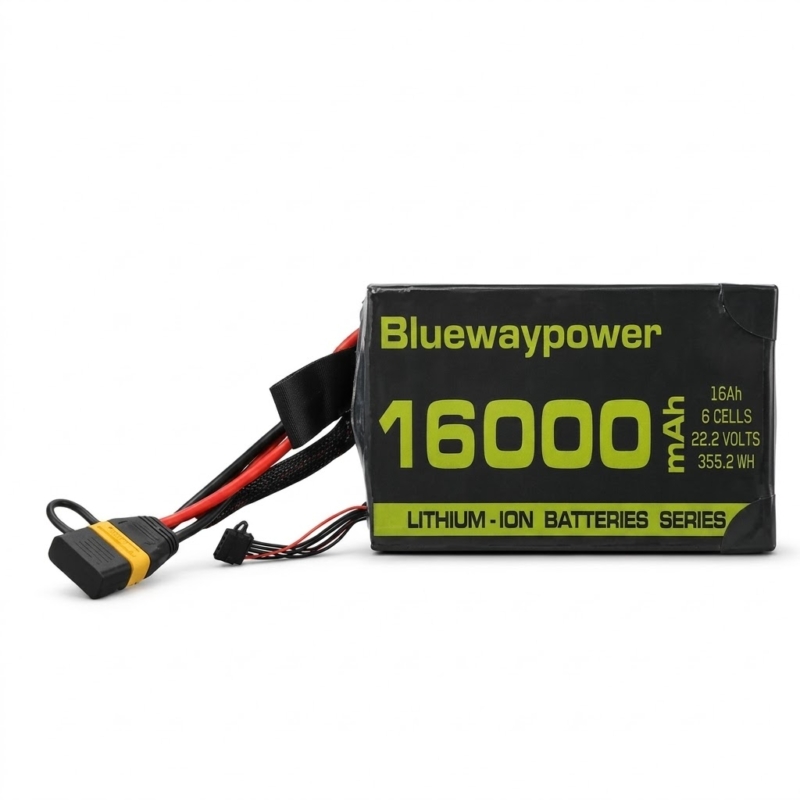
When you evaluate lithium polymer battery current for a drone battery pack, you need more than capacity alone. The battery must deliver stable power while matching the drone’s voltage, size, operating conditions, and power requirements. The Bluewaypower Lipo Battery Pack 16000mAh provides a nominal voltage of 22.2V and a capacity of 16000mAh, making it a high-capacity LiPo solution for demanding power applications. Shenzhen Defond Technology Co., Ltd. develops integrated battery solutions covering cells, BMS, and PACK manufacturing, helping you evaluate battery performance from the cell level through final system integration.
Lithium Polymer Battery Current and Key Specifications
The first step in selecting a LiPo battery is understanding the electrical specifications that directly affect system compatibility. The Bluewaypower battery uses LIPO cell chemistry and provides a 22.2V nominal voltage with 16000mAh capacity.
These specifications give you a clear starting point when matching the battery to your drone’s power system.
- Cell composition: LIPO
- Nominal voltage: 22.2V
- Capacity: 16000mAh
- Product type: LiPo battery pack
- Application focus: Drone and customized battery power systems
- Manufacturer: Shenzhen Defond Technology Co., Ltd.
However, capacity alone does not define the usable power of a battery. When you assess lithium polymer battery current, you should also consider the required discharge characteristics, operating environment, BMS configuration, connector design, and load profile of your equipment.
How Lithium Polymer Battery Current Affects Drone Performance
Drone systems can experience changing loads during takeoff, flight, hovering, payload operation, and landing. Therefore, you should evaluate current requirements against the actual flight profile instead of selecting a battery only by its mAh rating.
For example, an agricultural drone may require a different power profile from a power inspection drone. Payload weight, motors, flight duration, control systems, and environmental conditions can all affect battery demand.
For a 22.2V 16000mAh LiPo battery, the nominal energy can be estimated as:
22.2V × 16Ah = 355.2Wh
This theoretical nominal energy value helps you compare battery options during preliminary system design. Actual usable energy depends on discharge conditions, system efficiency, operating temperature, protection settings, and other application factors.
Factors You Should Evaluate
- Required continuous and peak current
- Battery voltage compatibility
- Expected flight duration
- Payload and motor load
- Operating temperature
- BMS protection requirements
- Connector and wiring specifications
- Available installation space
22.2V 16000mAh LiPo Battery vs Other Battery Requirements
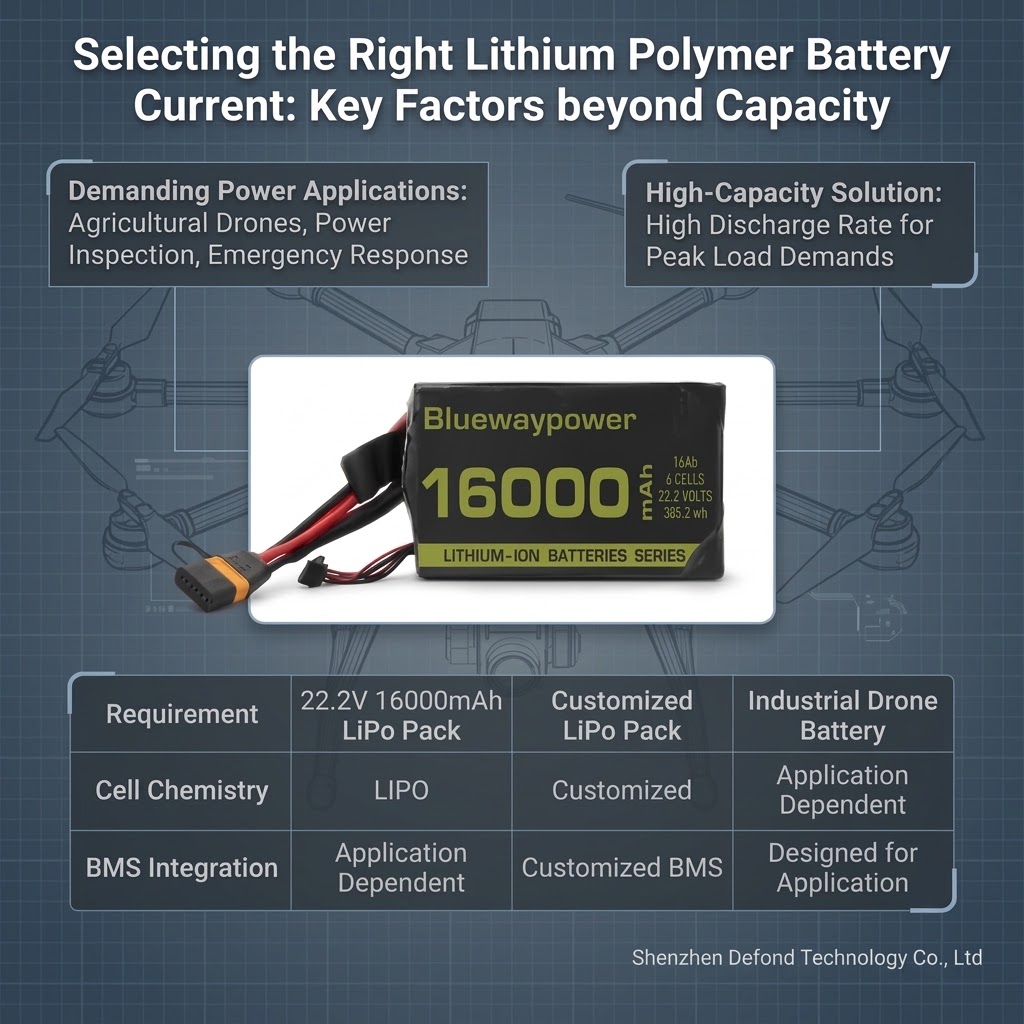
Different drone applications place different demands on battery systems. The following comparison can help you identify which specifications deserve attention during product selection.
| Requirement | 22.2V 16000mAh LiPo Pack | General LiPo Pack | Industrial Drone Battery |
|---|---|---|---|
| Cell chemistry | LIPO | LIPO | Application dependent |
| Nominal voltage | 22.2V | Varies | Customized |
| Capacity | 16000mAh | Varies | Customized |
| Energy | 355.2Wh nominal | Varies | Application dependent |
| Current requirements | Must match system load | Must be verified | Designed around load profile |
| BMS integration | Application dependent | Application dependent | Customized |
| Use case | High-capacity drone power | General applications | Agriculture, inspection, emergency response |
This comparison shows why you should evaluate the complete electrical system rather than relying on capacity as the only selection criterion.
How to Select a Lithium Polymer Battery Pack for Your Drone
When you source a high capacity LiPo battery pack for drones, follow a structured evaluation process. This approach can reduce compatibility problems and help you identify the right battery configuration.
- Define the drone’s power requirements. Determine nominal voltage, operating current, peak load, motor configuration, and expected flight time.
- Calculate the required capacity. Estimate energy consumption based on flight conditions, payload, and expected operating duration.
- Check battery current requirements. Compare the required continuous and peak current with the battery’s verified discharge specifications.
- Evaluate BMS and protection functions. For customized systems, review protection requirements such as overcharge, over-discharge, overcurrent, and temperature monitoring.
- Confirm mechanical integration. Check battery dimensions, weight, connector type, cable configuration, and mounting method.
- Discuss customization with the manufacturer. If standard specifications do not meet your drone design, request a customized cell, BMS, or PACK configuration.
Defond’s Integrated Drone Battery Solution
Shenzhen Defond Technology Co., Ltd. focuses specifically on integrated drone battery solutions covering cell, BMS, and PACK development. Founded in 2016 and headquartered in Shenzhen, Defond supports customized battery development for consumer and industrial drone applications.
The company operates advanced production facilities and maintains ISO9001 and ISO14001 certified quality systems. Its solutions serve customers across more than 30 countries and regions, with application experience in agriculture, power inspection, and emergency response.
Defond also maintains dedicated R&D capabilities, including the North America New Energy R&D Center QUBE and Jiangsu Sunpower Competitiveness Lab. These facilities support lithium battery technology research, product development, testing, and industrial application.
Why Work With Defond
- Full-chain development: Cell, BMS, and PACK integration
- Customized development: Solutions for different drone platforms
- R&D capabilities: Dedicated technical teams and laboratories
- Quality management: ISO9001 and ISO14001 certified systems
- Global experience: Customers in more than 30 countries and regions
- Production scalability: Support for small-batch development and mass production
- Application expertise: Agriculture, power inspection, and emergency response
FAQ
What is lithium polymer battery current?
Lithium polymer battery current refers to the electrical current a LiPo battery can deliver to a connected load. The actual allowable current depends on factors such as cell design, discharge characteristics, battery configuration, temperature, and protection settings.
Is a 22.2V 16000mAh LiPo battery suitable for drones?
A 22.2V 16000mAh LiPo battery can be considered for drone applications when its voltage, capacity, current capability, dimensions, weight, and connector configuration match the drone’s requirements. You should verify the complete electrical load before final selection.
Can Defond customize a LiPo battery pack?
Yes. Defond provides integrated battery development covering customized cells, BMS, and PACK manufacturing. You can discuss your voltage, capacity, current, dimensions, connector, protection, and application requirements with its engineering team.
Conclusion
Choosing the right lithium polymer battery current configuration requires you to evaluate voltage, capacity, current demand, operating conditions, BMS requirements, and mechanical integration together. The Bluewaypower Lipo Battery Pack 16000mAh provides a 22.2V nominal voltage and 16000mAh capacity, while Shenzhen Defond Technology Co., Ltd. offers integrated cell, BMS, and PACK capabilities for customized drone battery development.
CTA: Request a Customized Battery Solution
If you are developing a consumer or industrial drone and need a customized 22.2V 16000mAh LiPo battery pack, contact Defond with your required voltage, capacity, discharge current, dimensions, connector type, operating environment, and application details. The engineering team can evaluate your requirements and provide a suitable battery solution.