
When your equipment requires high current output without sacrificing battery stability, choosing the right cell becomes essential. A high discharge 21700 battery can support demanding power requirements in applications where consistent energy delivery and compact cylindrical dimensions matter. However, not every 21700 lithium-ion cell offers the same discharge capability, temperature tolerance, or integration potential.
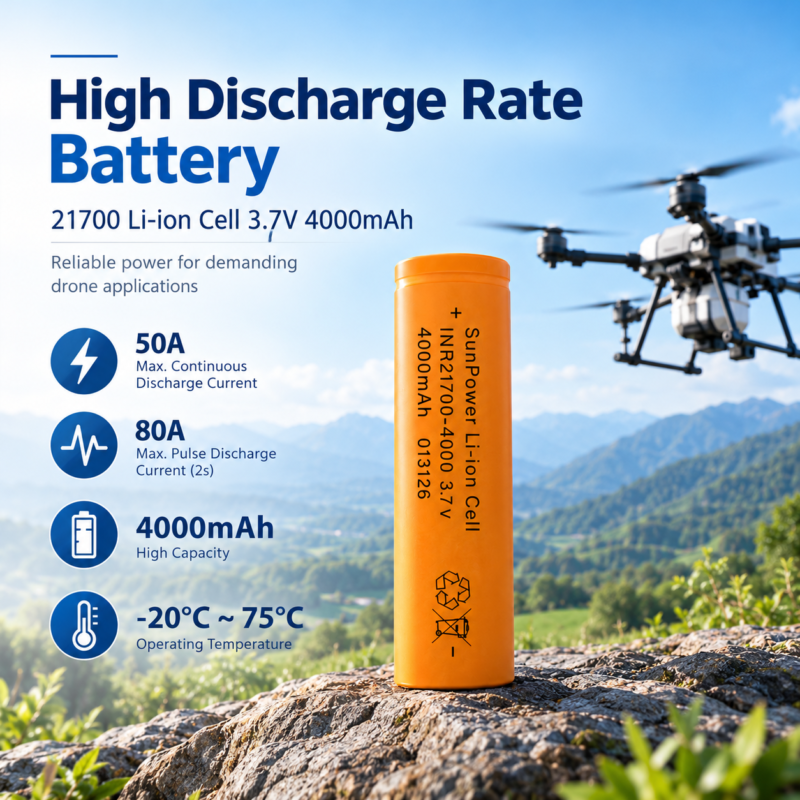
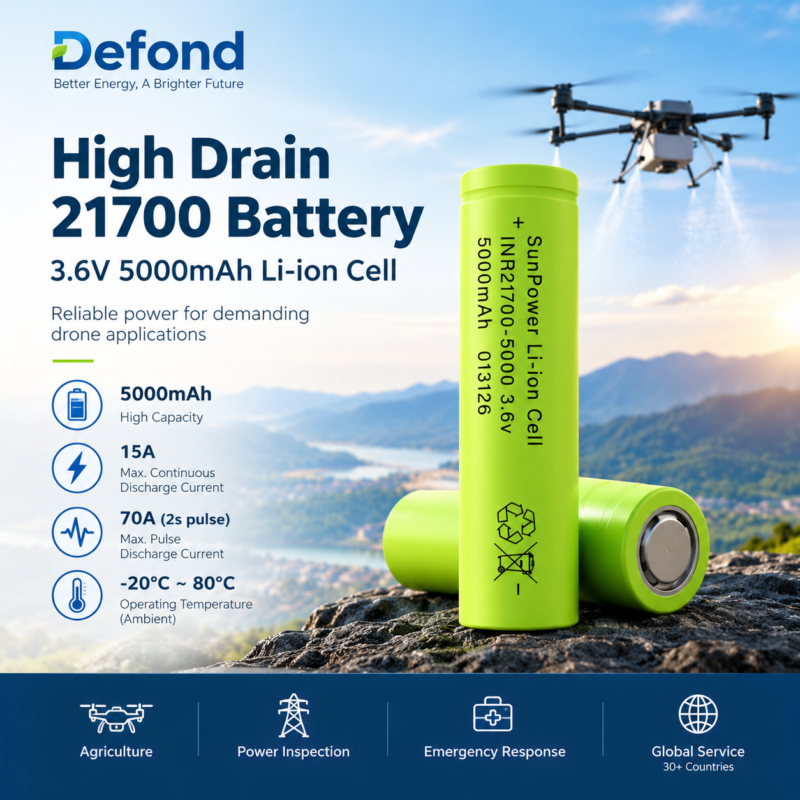
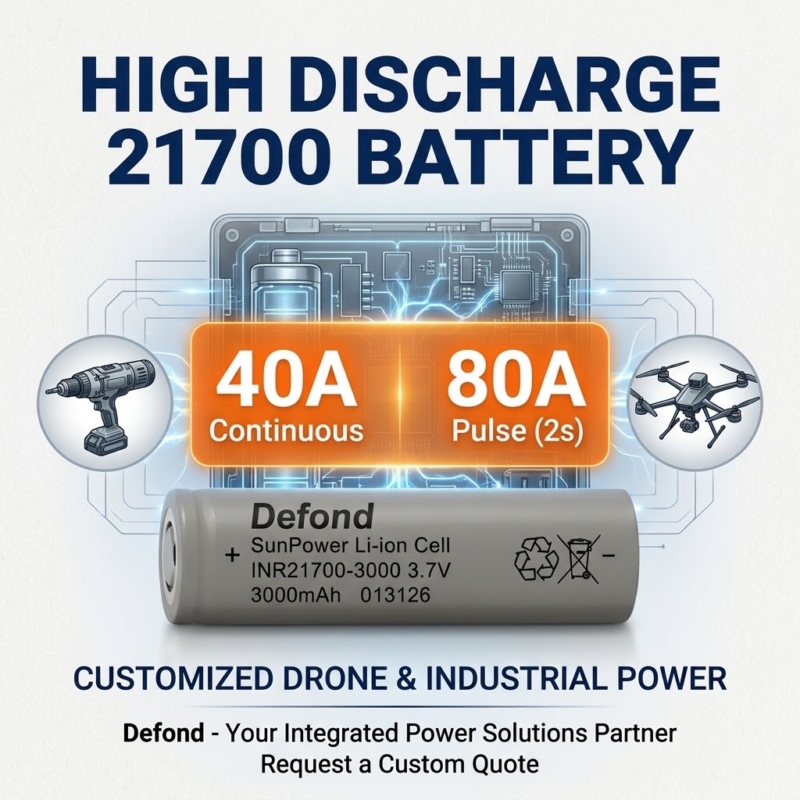
Defond 21700-30S lithium-ion cell addresses these requirements with a nominal voltage of 3.7V, a capacity of 3000mAh, and a maximum continuous discharge current of 40A. Its pulse discharge capability reaches 80A for 2 seconds. These specifications make it a potential option for high-current battery systems, including customized power solutions for industrial equipment and drone applications, subject to system-level validation.
21700 High Discharge Battery: Key Specifications
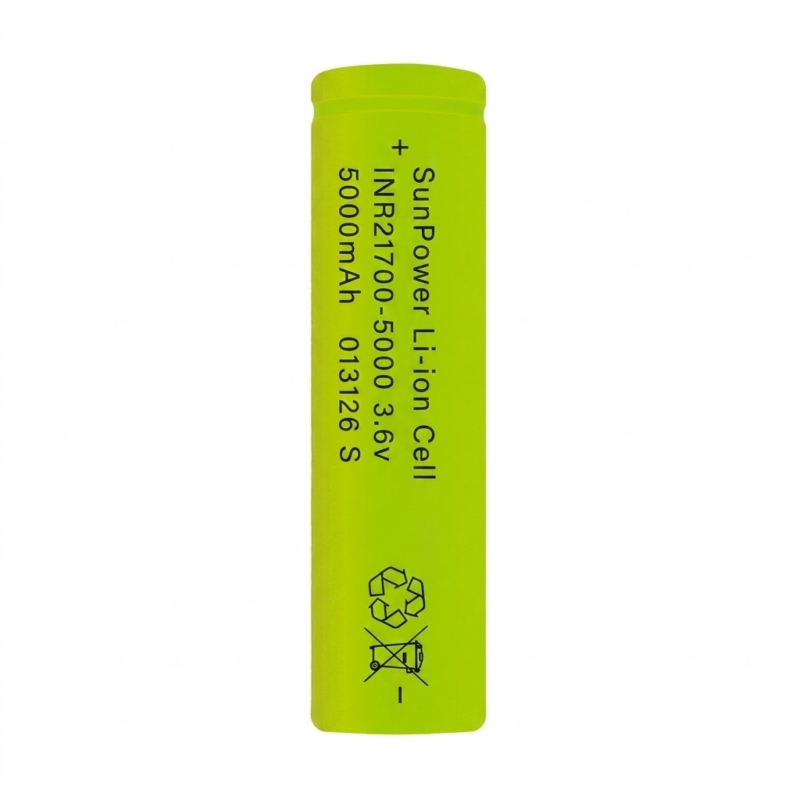
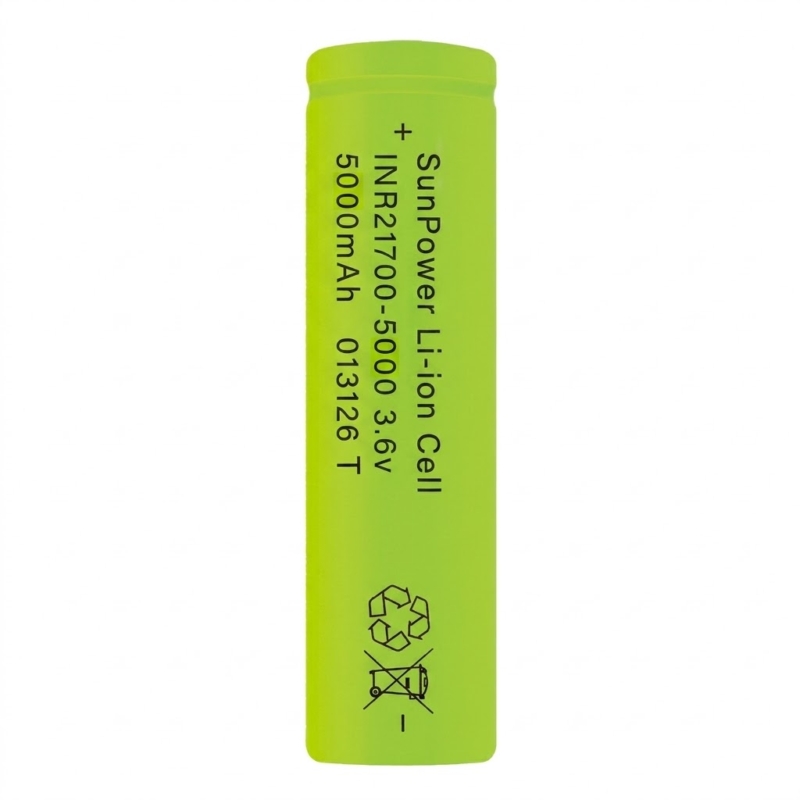
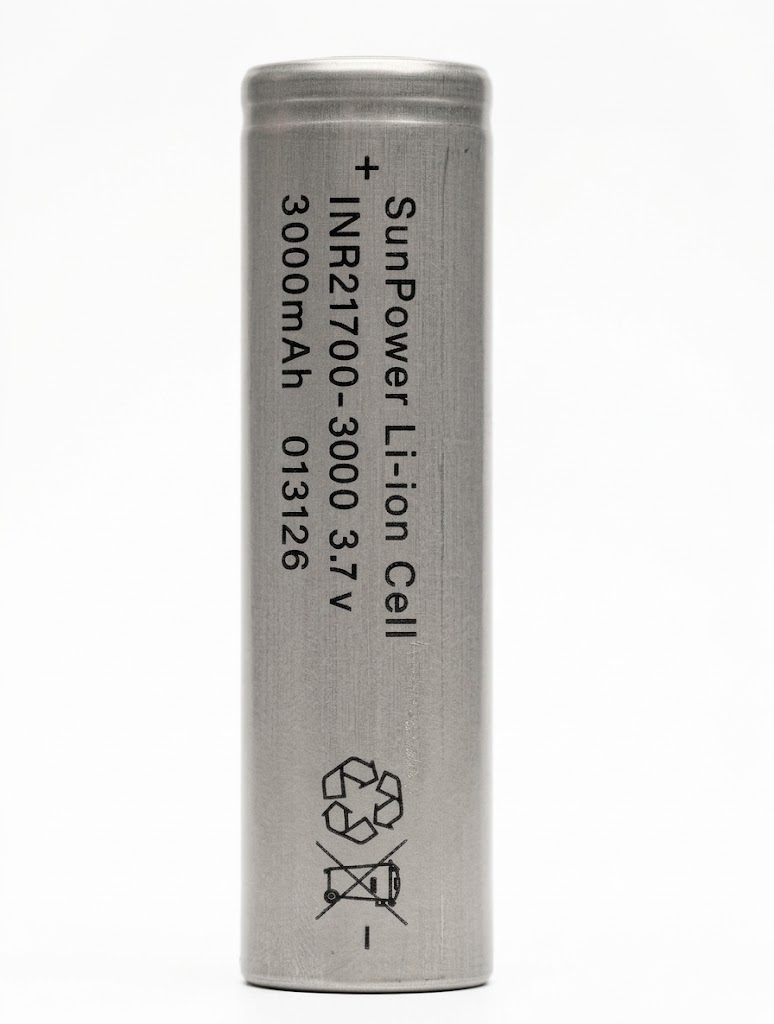
The 21700-30S is a cylindrical lithium-ion cell designed for applications that require substantial current output from an individual battery cell. Its combination of 3000mAh capacity and high discharge capability gives battery designers flexibility when developing compact power systems.
Here are the key specifications:
| Parameter | Specification |
|---|---|
| Model | 21700-30S |
| Cell Type | Lithium-ion |
| Nominal Voltage | 3.7V |
| Capacity | 3000mAh |
| Operating Temperature (Ambient) | -20°C to 75°C |
| Maximum Continuous Discharge Current | 40A |
| Maximum Pulse Discharge Current | 80A (2 seconds) |
| Cell Format | 21700 cylindrical |
The 40A continuous discharge rating supports applications with sustained high-current requirements, while the 80A pulse rating provides additional short-duration output when the operating conditions permit.
Before selecting this cell, you should also evaluate the actual load profile, thermal management, discharge curves, and operating environment of your equipment.
Why Choose a High Discharge 21700 Battery?
A battery cell’s capacity alone does not determine whether it can meet your equipment’s power requirements. Discharge performance is equally important, particularly when your application involves frequent current fluctuations or demanding workloads.
1. High Continuous Current Output
With a maximum continuous discharge current of 40A, the 21700-30S supports equipment that needs relatively high current during operation.
This characteristic can be useful when designing:
- High-power portable equipment
- Industrial electrical systems
- Specialized power tools
- Customized drone battery packs, subject to application testing
2. Short-Duration Pulse Discharge
Some electrical systems experience temporary current peaks during startup, acceleration, or rapid changes in operating conditions.
The cell supports a maximum pulse discharge current of 80A for 2 seconds. This capability gives battery engineers additional flexibility when evaluating short-duration power demands.
However, you should not treat the pulse rating as a continuous operating current. Proper protection, temperature monitoring, and load testing remain essential.
3. Wide Ambient Operating Temperature Range
The specified ambient operating temperature range is -20°C to 75°C.
This range provides flexibility when evaluating battery applications exposed to changing environmental conditions. Nevertheless, actual usable performance depends on discharge current, heat dissipation, charging conditions, and the battery system’s thermal design.
High Discharge 21700 Battery vs. Standard 21700 Cells
When comparing 21700 battery cells, you should look beyond their physical dimensions. Discharge current, capacity, and application requirements determine whether a particular model suits your equipment.
| Comparison Factor | 21700-30S | Standard 21700 Cell |
|---|---|---|
| Cell Format | 21700 cylindrical | 21700 cylindrical |
| Capacity | 3000mAh | Varies by model |
| Continuous Discharge | Up to 40A | Depends on cell design |
| Pulse Discharge | Up to 80A for 2 seconds | Depends on cell design |
| Operating Temperature | -20°C to 75°C | Depends on model |
| Application Selection | High-current designs | Depends on power requirements |
The comparison shows why you should evaluate the manufacturer’s actual datasheet instead of assuming that all 21700 lithium-ion cells offer similar performance.
How to Select a 21700 Cell for Your Battery Pack
Choosing a suitable high discharge lithium-ion cell involves more than matching voltage and capacity. Follow these steps before moving into battery pack development.
Step 1: Define Your Power Requirements
Calculate your equipment’s nominal voltage, operating current, peak current, and expected runtime. Identify whether the load requires continuous high-current output or only occasional power peaks.
Step 2: Evaluate Cell Performance
Compare the 21700-30S specifications with your requirements. Pay particular attention to its 3.7V nominal voltage, 3000mAh capacity, 40A continuous discharge, and 80A pulse discharge rating.
Step 3: Design the BMS and PACK
If you are developing a complete battery system, evaluate the required cell configuration, battery management system (BMS), overcurrent protection, and thermal management.
Defond provides integrated battery solutions covering cell development, BMS, and PACK manufacturing, supporting customers who need coordinated battery system development.
Step 4: Conduct Application Testing
Validate the assembled battery under actual operating conditions. Test discharge performance, temperature rise, protection functions, cycle life, and mechanical compatibility before deployment.
Why Work with Defond for High Discharge Battery Solutions?
Shenzhen Defond Technology Co., Ltd. specializes in new energy battery solutions, with a particular focus on drone power systems. Founded in 2016 and headquartered in Shenzhen, the company provides integrated development covering customized battery cells, self-developed chip-level BMS, and PACK manufacturing.
When you work with Defond, you can access several capabilities:
- Full-chain integration: Cell, BMS, and PACK development under one solution framework.
- Drone battery expertise: Solutions designed for consumer and industrial drone applications, including agriculture, power inspection, and emergency response.
- R&D capabilities: Technical resources supporting customized battery development and product optimization.
- Certified quality management: ISO9001 and ISO14001 certified management systems.
- International experience: Products and solutions serving customers across more than 30 countries and regions.
- Scalable manufacturing: Production capabilities supporting different project volumes and customization requirements.
These capabilities allow Defond to support customers throughout battery development, from initial cell selection to customized battery pack integration.
FAQ
1. What is the maximum continuous discharge current of the 21700-30S?
The 21700-30S supports a maximum continuous discharge current of 40A. Its maximum pulse discharge current is 80A for 2 seconds. Always follow the specified operating conditions.
2. Is the 21700-30S suitable for drone battery applications?
It can be evaluated for customized drone battery designs that require high current output. However, suitability depends on the drone’s voltage, weight, flight time, peak current, thermal requirements, and battery configuration. Application testing is necessary before deployment.
3. Can Defond provide customized battery pack solutions?
Yes. Defond provides integrated solutions covering customized cells, self-developed BMS, and PACK manufacturing. Customers can discuss their voltage, capacity, discharge current, dimensions, and application requirements with its technical team.
Conclusion
Selecting a high discharge 21700 battery requires careful consideration of current output, capacity, operating temperature, and application-specific performance. The Defond 21700-30S combines 3.7V nominal voltage, 3000mAh capacity, 40A continuous discharge, and 80A pulse discharge for 2 seconds, making it a candidate for demanding high-current battery designs.
With integrated cell, BMS, and PACK capabilities, Shenzhen Defond Technology Co., Ltd. can support your battery development requirements, from initial technical evaluation to customized system integration.
Request a Customized Battery Solution
Are you developing a high-current battery system for drones or industrial equipment? Contact Defond to discuss your technical specifications, project requirements, and potential battery configurations.
Submit your application details and estimated quantity through the 21700 Li-ion Cell product inquiry page to start your consultation.