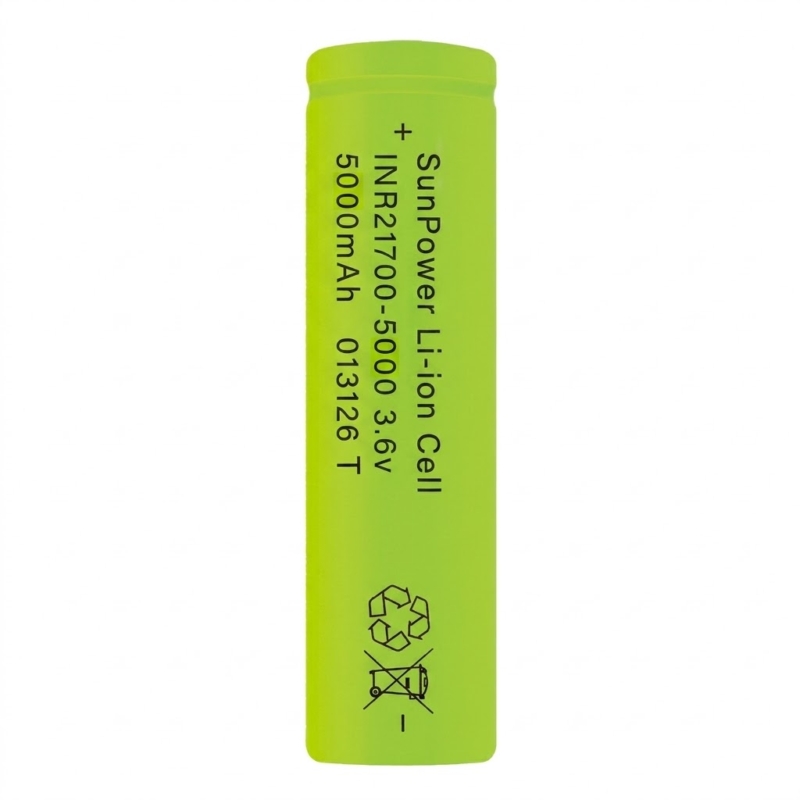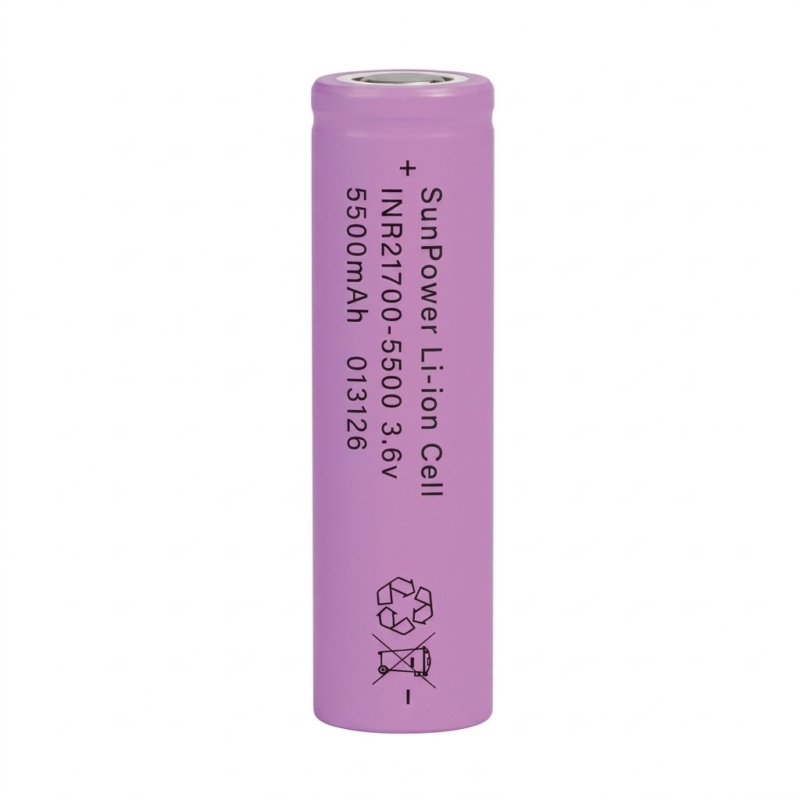

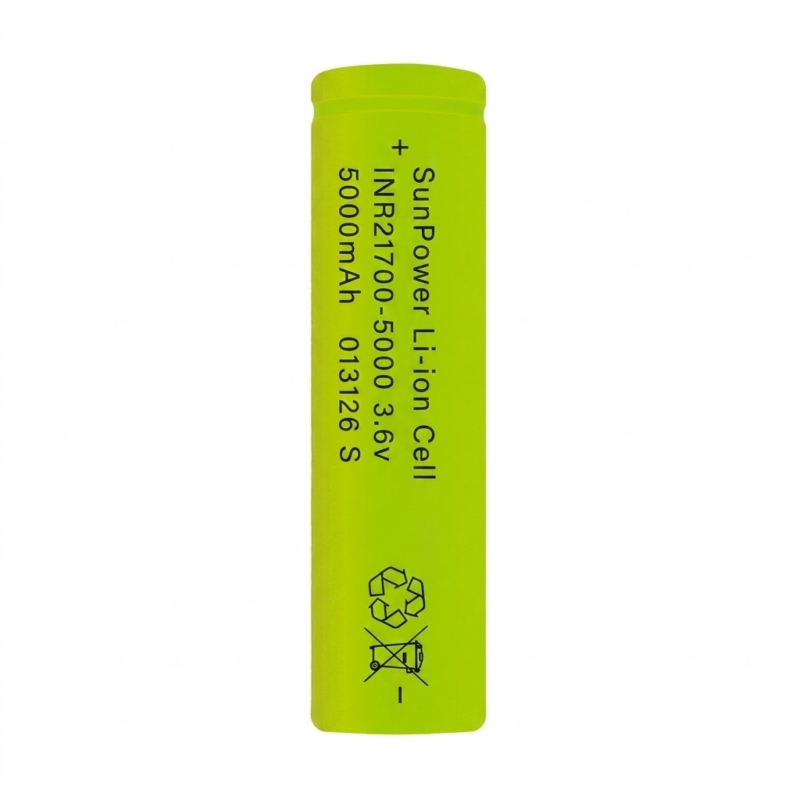
A high capacity 21700 battery can help you balance runtime, current output, and space requirements when selecting a lithium-ion cell for your equipment. However, capacity alone does not determine whether a battery will meet your application’s needs. You also need to evaluate continuous discharge current, pulse current, operating temperature, and compatibility with your battery management system (BMS).
Shenzhen Defond Technology Co., Ltd. offers the 21700-50SE lithium-ion cell, rated at 3.6V and 5000mAh. With a maximum continuous discharge current of 20A and a maximum pulse discharge current of 90A for two seconds, this cylindrical cell provides defined electrical parameters for battery system development. Understanding these specifications helps you determine whether the cell suits your equipment before moving into prototype development or production.
1. What Makes a High Capacity 21700 Battery Different?
A 21700 battery uses a cylindrical cell format commonly associated with a nominal diameter of approximately 21mm and a length of approximately 70mm. Compared with smaller cylindrical formats, the 21700 format can accommodate greater cell capacity, depending on the chemistry and internal design.
For product developers, the key is to evaluate capacity alongside electrical performance and physical dimensions rather than choosing a cell based on its format alone.
The Defond 21700-50SE has the following specifications:
| Parameter | Specification |
|---|---|
| Model | 21700-50SE |
| Cell chemistry | Lithium-ion |
| Nominal voltage | 3.6V |
| Rated capacity | 5000mAh (5Ah) |
| Maximum continuous discharge current | 20A |
| Maximum pulse discharge current | 90A for 2 seconds |
| Ambient operating temperature | -20°C to 60°C |
These figures provide a starting point for evaluating the cell. Actual performance depends on operating conditions, discharge profiles, system design, and the manufacturer’s applicable specifications.
2. How Does 5000mAh Capacity Affect Battery Runtime?
A 5000mAh rating equals 5Ah of nominal electrical capacity. This value helps you estimate how much charge a cell can deliver under specified test conditions, although usable capacity varies with current, temperature, and the cell’s operating limits.
For example, if your equipment draws an average current of 2A, a simple theoretical estimate is:
Runtime = Capacity ÷ Average Current
5Ah ÷ 2A = 2.5 hours.
This is an illustrative calculation, not a guaranteed runtime. Actual operating time may be shorter because of conversion losses, voltage cutoffs, temperature, and variations in the load.
When selecting a high capacity cylindrical lithium battery, consider these factors:
- Average current consumption: Higher current demand generally reduces available runtime.
- Voltage requirements: Confirm that the equipment can operate within the battery system’s voltage range.
- Space constraints: Check cell dimensions and the enclosure’s available volume.
- Thermal management: Assess heat generation under expected operating conditions.
These checks help you evaluate whether a 21700 5000mAh battery can support your target runtime and product design.
3. Understanding Continuous and Pulse Discharge Current
Capacity describes charge storage, while discharge current indicates how quickly a cell can deliver electrical current. Both specifications matter when your equipment combines extended operating time with short periods of higher power demand.
The 21700-50SE supports a maximum continuous discharge current of 20A. Its specified maximum pulse discharge current is 90A for two seconds.
However, the 90A pulse rating must not be treated as a continuous operating current. Before designing around this value, confirm the permitted pulse conditions, repetition frequency, temperature limits, voltage response, and protection requirements with the supplier.
For applications with changing loads, assess:
- Normal operating current and peak current.
- Duration and frequency of current peaks.
- Cell temperature during repeated discharge cycles.
- BMS overcurrent protection and response time.
- Wiring, connectors, and other components in the current path.
A complete system assessment helps reduce the risk of overheating, voltage instability, or premature battery degradation.
4. How to Select a 21700 Battery Cell for Your Application
Follow these steps before specifying a high capacity 21700 battery for a new product.
- Define your power requirements. Record the required voltage, average current, peak current, and expected operating time.
- Calculate the capacity requirement. Estimate energy consumption and allow for practical losses and reserve capacity.
- Check environmental conditions. Confirm that the specified ambient temperature range of -20°C to 60°C aligns with your intended application. Verify any additional charging and storage limits separately.
- Evaluate BMS compatibility. Match the protection strategy to the cell configuration, current demand, voltage limits, and temperature monitoring requirements.
- Request technical validation. Obtain the applicable datasheet and confirm performance under your expected operating conditions before finalizing the design.
This process is particularly useful for OEMs and engineering teams developing rechargeable battery systems for equipment with defined space and power requirements.
5. Why Work with Shenzhen Defond Technology Co., Ltd.?
Shenzhen Defond Technology Co., Ltd. was founded in 2016 and specializes in integrated battery solutions covering cells, battery management systems, and PACK manufacturing.
Its capabilities support customers who need more than a standalone cell, particularly when electrical compatibility and system integration affect the development process.
Key reasons to evaluate Defond include:
- Integrated development: Cell, self-developed chip-level BMS, and PACK capabilities support coordinated battery system development.
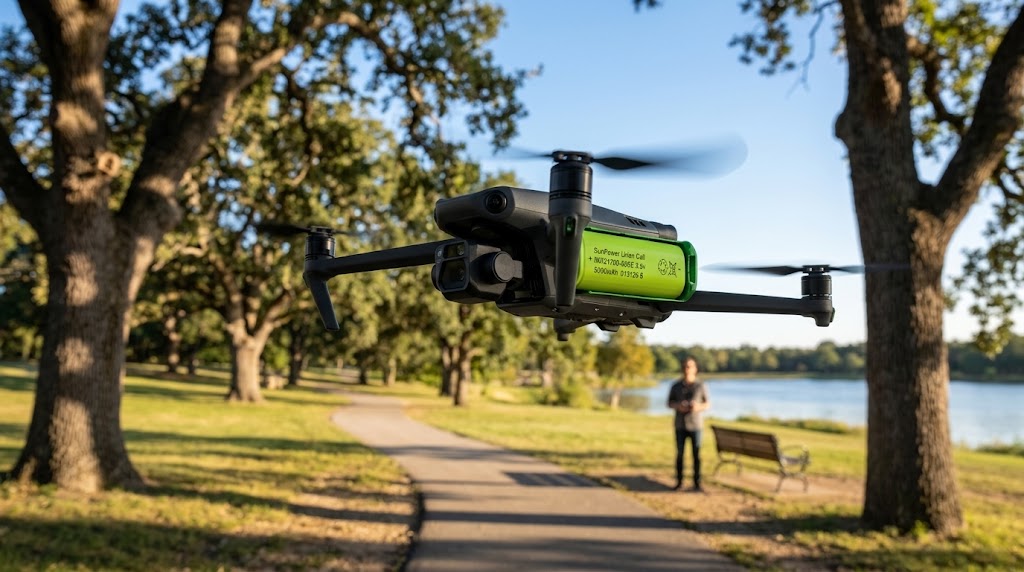
- Custom engineering support: The company develops solutions for consumer-grade and industrial drone applications.
- Quality management: Defond reports ISO 9001 and ISO 14001 certifications for its quality and environmental management systems.
- Manufacturing capabilities: Production facilities and testing equipment support product development and manufacturing.
- International experience: The company serves customers in more than 30 countries and regions.
Although Defond has a strong focus on drone battery solutions, you should confirm the 21700-50SE cell’s intended applications and suitability for your specific equipment directly with its technical team.
FAQ
1. What is the capacity of the Defond 21700-50SE battery?
The 21700-50SE has a rated capacity of 5000mAh (5Ah) and a nominal voltage of 3.6V. Actual usable capacity depends on operating conditions and the applicable discharge specifications.
2. Can the 21700-50SE deliver 90A continuously?
No. The listed 90A rating applies to a pulse lasting two seconds. The maximum specified continuous discharge current is 20A. Consult Defond for the permitted pulse conditions and protection requirements before designing your system.
3. Can Defond provide customized battery solutions?
Defond provides integrated battery development covering cells, BMS, and PACK manufacturing. Contact the company to discuss customization requirements, technical compatibility, production quantities, and available testing support.
Conclusion
Choosing a high capacity 21700 battery requires more than comparing milliamp-hour ratings. You need to consider nominal voltage, continuous and pulse discharge limits, operating temperature, runtime expectations, and system-level protection. The Defond 21700-50SE offers a rated capacity of 5000mAh, a nominal voltage of 3.6V, and defined discharge specifications that help engineers assess its suitability for a target design.
Contact Defond for Technical Specifications and a Quote
Visit the Defond 21700 Li-ion Cell product page to submit your requirements. Share your target application, voltage, current profile, estimated quantity, and development schedule so the team can evaluate compatibility and discuss the next steps.