
When drone systems demand stable power under sudden load changes, choosing the right battery cell becomes critical. Battery pulse discharge current determines whether a lithium battery can deliver short bursts of high power without performance drops. Defond develops customized drone battery solutions with advanced cells, BMS, and PACK integration to help you achieve reliable energy output.
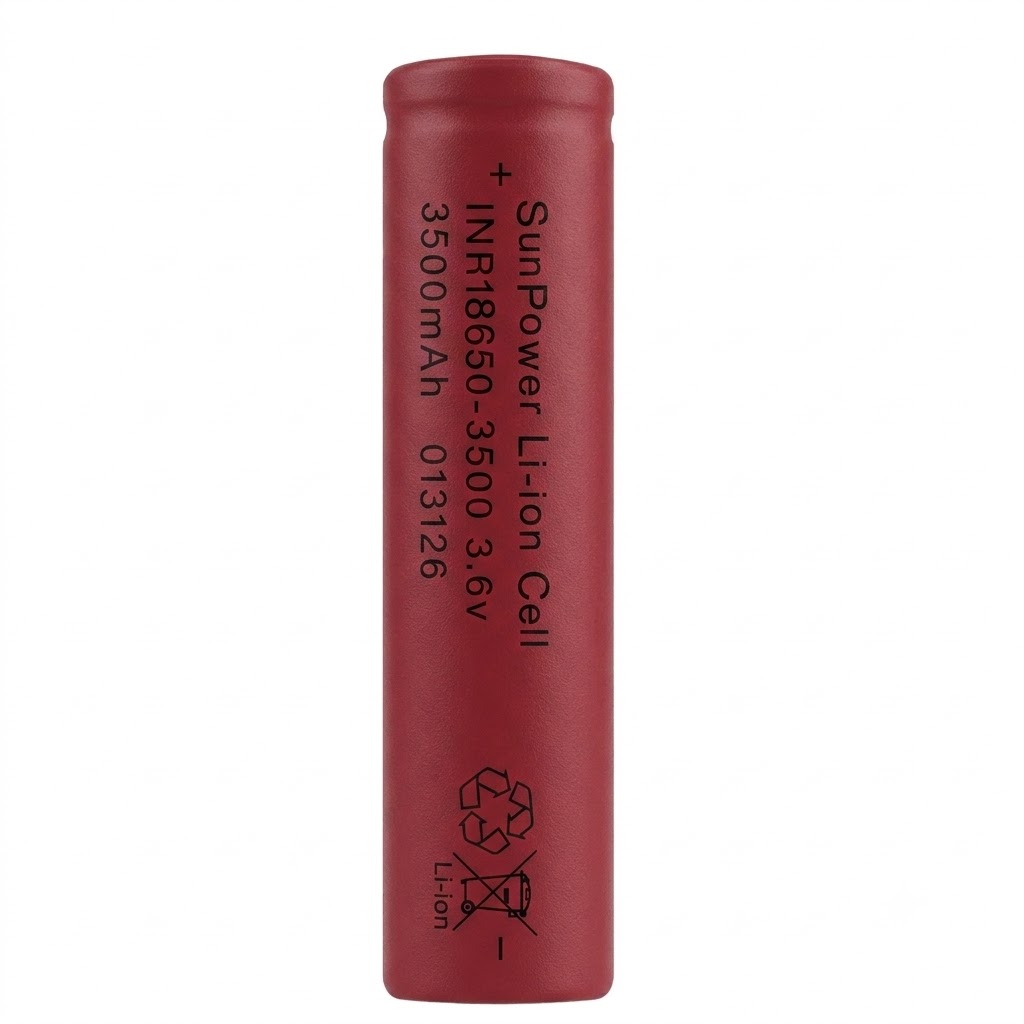
The 18650 Li-ion Battery Cell 3.6V 3500mAh from Defond is designed for applications requiring high current capability. With a 50A pulse discharge current (2s pulse) and 15A continuous discharge current, this cell supports demanding drone operations, industrial equipment, and high-performance battery packs.
Battery Pulse Discharge Current Capability of Defond 18650 Cell
For drone battery applications, short-term power demand can increase rapidly during takeoff, acceleration, hovering adjustments, or emergency operations. Defond’s 18650-35P lithium-ion cell provides strong current output while maintaining stable operation.
Key specifications include:
- Model: 18650-35P
- Battery Type: Lithium-ion cell
- Nominal Voltage: 3.6V
- Capacity: 3500mAh
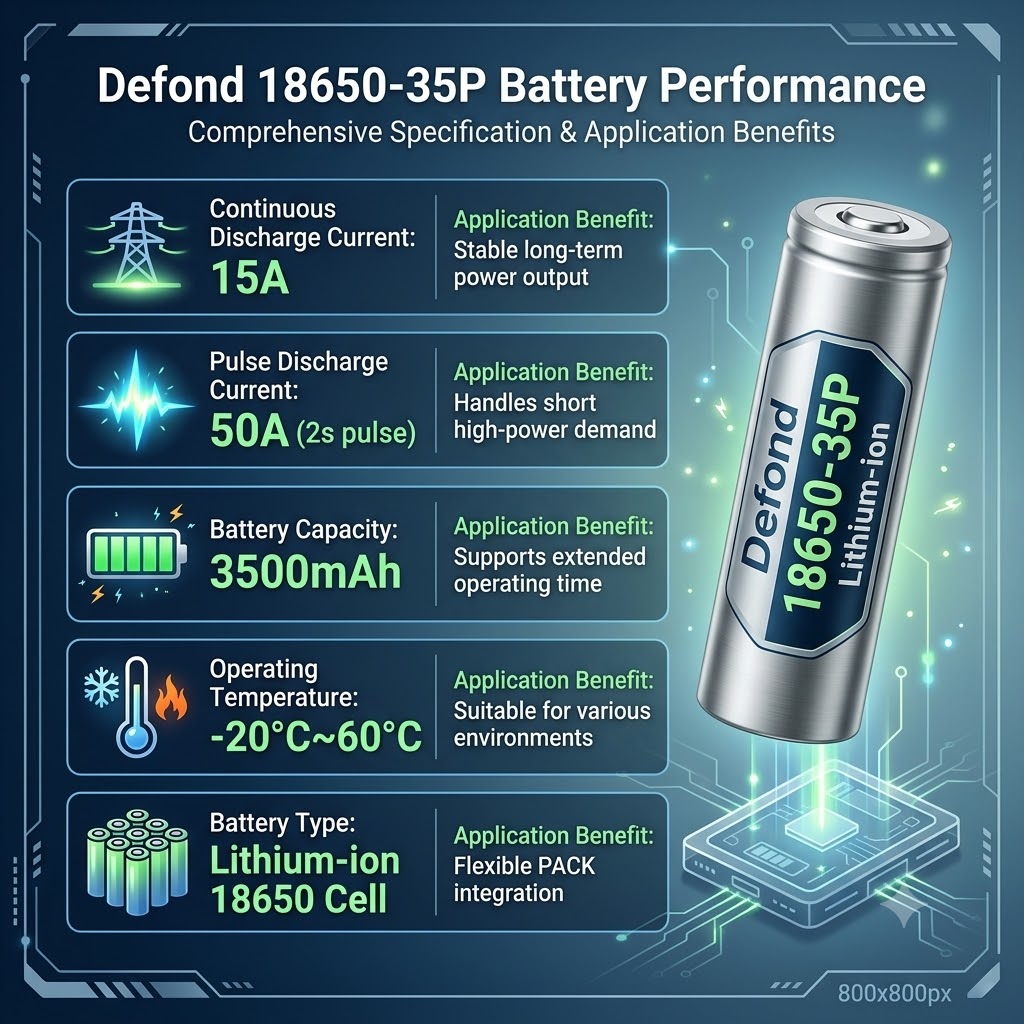
- Max Continuous Discharge Current: 15A
- Max Pulse Discharge Current: 50A (2 seconds)
- Operating Temperature: -20°C to 60°C
The combination of high capacity and high discharge capability makes this cell suitable for drone battery packs that require both endurance and power response.
How Battery Pulse Discharge Current Supports Drone Applications
Drone systems often experience rapid changes in power consumption. A battery with insufficient discharge capability may cause voltage drops, reduced flight stability, or shortened operational efficiency.
Defond’s battery cells are developed for scenarios including:
- Agricultural drones: Supporting spraying systems and long-duration field operations.
- Power inspection drones: Providing stable energy during high-altitude inspection tasks.
- Emergency response drones: Delivering reliable power during urgent missions.
- Industrial UAV platforms: Meeting higher power requirements for professional applications.
With experience serving customers in more than 30 countries and regions, Defond combines battery cell development, self-developed BMS technology, and PACK manufacturing to provide integrated drone energy solutions.
18650-35P Battery Current Specification Comparison
Understanding the difference between continuous and pulse discharge capability helps you select the correct battery solution.
| Battery Performance | Defond 18650-35P Specification | Application Benefit |
|---|---|---|
| Continuous Discharge Current | 15A | Stable long-term power output |
| Pulse Discharge Current | 50A (2s pulse) | Handles short high-power demand |
| Battery Capacity | 3500mAh | Supports extended operating time |
| Operating Temperature | -20°C~60°C | Suitable for various environments |
| Battery Type | Lithium-ion 18650 Cell | Flexible PACK integration |
Compared with standard lithium-ion cells designed for low-current applications, the 18650-35P focuses on higher current output and stronger pulse performance.
Why Choose Defond for High Pulse Discharge Lithium Battery Solutions
Defond provides full-chain battery development from cell selection to finished PACK production. This approach helps you achieve better compatibility, faster customization, and consistent quality.
Your advantages include:
- Full-chain integration: Cell, BMS, and PACK development completed through one supplier.
- Certified manufacturing: Production systems comply with ISO9001 and ISO14001 quality and environmental standards.
- Advanced R&D capability: Supported by experienced technical teams and lithium battery research centers.
- Flexible OEM/ODM services: Customized solutions for different drone platforms and energy requirements.
- Reliable production capacity: Advanced manufacturing lines support both prototype development and mass production.
How Defond Develops Customized Drone Battery Solutions
When you require a customized lithium battery solution, Defond follows a structured development process:
- Requirement analysis
Evaluate drone power requirements, discharge rate, capacity, size limitations, and operating conditions. - Battery cell selection
Select suitable lithium-ion cells according to energy density, current capability, and application environment. - BMS and PACK design
Develop intelligent battery management systems and optimized PACK structures for safety and performance. - Testing and validation
Conduct performance tests, discharge evaluations, and reliability checks before production. - Mass production support
Provide scalable manufacturing with quality control throughout the production process.
FAQ
1. What is battery pulse discharge current?
Battery pulse discharge current refers to the maximum current a battery can deliver for a short period. It is important for applications that require sudden power increases, such as drone takeoff or acceleration.
2. Why does a drone battery need high pulse discharge capability?
Drones frequently experience rapid power changes. A higher pulse discharge capability helps maintain stable voltage output and improves flight reliability during demanding operations.
3. What is the pulse discharge current of the Defond 18650-35P cell?
The Defond 18650-35P lithium-ion cell provides a 50A pulse discharge current for 2 seconds and a 15A continuous discharge current, making it suitable for high-power drone battery applications.
Conclusion
Selecting the right battery cell directly affects drone performance, safety, and operational efficiency. Defond provides professional lithium battery solutions with customized cell, BMS, and PACK capabilities. The battery pulse discharge current of the Defond 18650-35P reaches 50A (2s pulse), helping drone manufacturers build reliable and high-performance power systems.
CTA
Need a customized drone battery solution? Contact Defond today to discuss your capacity, discharge current, BMS, and PACK requirements. Submit your project details and receive professional battery design support from Defond’s engineering team.