

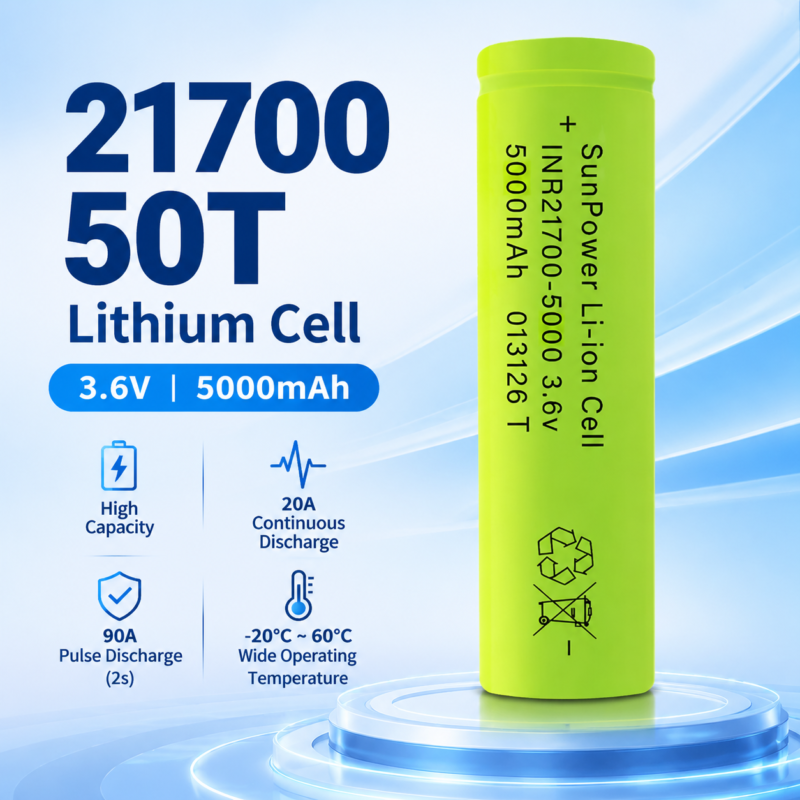
Choosing the right 21700 50t lithium cell involves more than comparing battery capacity. You also need to evaluate continuous discharge capability, pulse current, operating temperature, and compatibility with your battery management system (BMS). An unsuitable cell can limit the performance and reliability of your final battery pack, especially in applications that require high power output and stable operation.
The 21700-50T lithium-ion cell offers a nominal voltage of 3.6V and a capacity of 5000mAh, combining high energy capacity with substantial discharge capability. For battery developers, equipment manufacturers, and drone power system integrators, understanding these specifications helps determine whether this cell meets specific application requirements. Shenzhen Defond Technology Co., Ltd. provides integrated battery solutions covering cells, BMS, and PACK manufacturing to support customized energy projects.
21700 50T Lithium Cell: Key Specifications
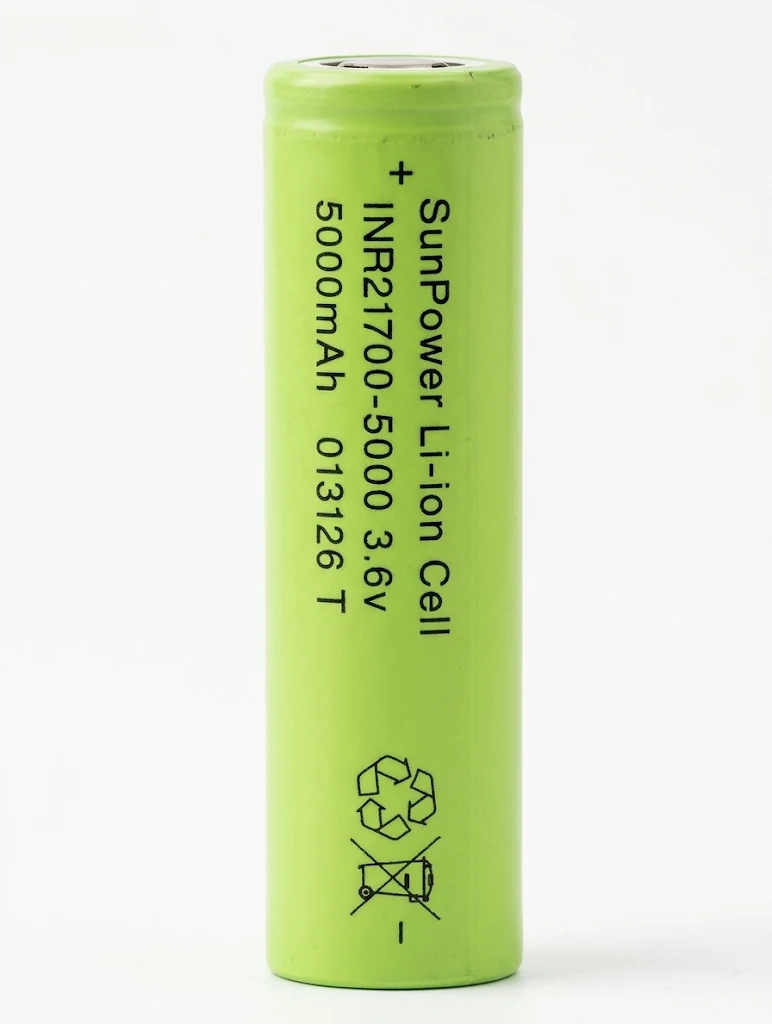
The 21700-50T is a rechargeable lithium-ion cell designed for applications that require a combination of capacity and discharge performance. Its cylindrical 21700 format provides a standardized physical platform for battery pack development.
Here are its main specifications:
| Parameter | Specification |
|---|---|
| Model | 21700-50T |
| Cell Type | Lithium-ion |
| Nominal Voltage | 3.6V |
| Rated Capacity | 5000mAh (5Ah) |
| Maximum Continuous Discharge Current | 20A |
| Maximum Pulse Discharge Current | 90A (2-second pulse) |
| Operating Temperature (Ambient) | -20°C to 60°C |
| Cell Format | 21700 cylindrical |
These figures help you evaluate the cell’s electrical performance before integrating it into a battery system.
What Do the Discharge Ratings Mean?
The discharge ratings determine how the cell delivers electrical energy under different load conditions.
- 20A continuous discharge: This is the maximum specified continuous discharge current. Your application should remain within this limit while considering thermal conditions and manufacturer specifications.
- 90A pulse discharge: The cell supports a maximum pulse discharge of 90A for 2 seconds. This rating is relevant when evaluating short-duration power demands, but it does not indicate that the cell can sustain 90A continuously.
- 5000mAh capacity: The rated capacity provides a reference for estimating operating time under a defined discharge profile.
For example, a power system with frequent short-duration current peaks needs to consider both continuous and pulse discharge ratings rather than selecting a cell based on capacity alone.
Why Choose a 21700 50T Lithium Cell?
When developing a rechargeable battery system, you need to balance energy capacity, power output, thermal performance, and available installation space.
The 21700-50T offers several characteristics worth evaluating:
- High capacity: Its 5000mAh rating provides substantial energy storage in a single cylindrical cell.
- High discharge capability: The 20A continuous rating and 90A two-second pulse rating support demanding power requirements within their specified limits.
- Wide ambient operating range: Its specified operating temperature range of -20°C to 60°C gives battery designers a reference for evaluating environmental suitability.
- Standardized cell format: The 21700 form factor supports systematic battery pack design and series-parallel configuration planning.
However, actual battery performance depends on cell configuration, discharge conditions, cooling design, BMS settings, and the requirements of the end application.
21700 50T vs. Other Battery Cell Options
Different cylindrical battery formats serve different capacity and power requirements. Before choosing a cell, consider its physical dimensions, electrical characteristics, and intended pack configuration.
| Comparison Factor | 21700-50T | Typical 18650 Cell |
|---|---|---|
| Cell Diameter | 21mm | 18mm |
| Cell Length | 70mm | 65mm |
| Nominal Voltage | 3.6V | Depends on cell model |
| Capacity | 5000mAh | Depends on cell model |
| Discharge Performance | 20A continuous, 90A pulse (2s) | Depends on cell model |
| Main Consideration | Higher capacity per cell in this model | Compact cell dimensions |
The 21700-50T offers a 5000mAh capacity, which can help reduce the number of cells required compared with lower-capacity alternatives. Nevertheless, you should compare verified specifications rather than assume every 21700 cell outperforms every 18650 cell.
How to Integrate a 21700 50T Cell into a Battery Pack
Selecting a suitable cell is only the first step. You also need to design the battery system around its electrical and environmental requirements.
Follow these steps when evaluating a 21700 battery configuration:
- Define the power requirements. Calculate the required voltage, operating current, peak current, and expected runtime of your equipment.
- Determine the cell configuration. Select the appropriate series and parallel arrangement. Series connections increase voltage, while parallel connections increase capacity and available current.
- Select a compatible BMS. Match the BMS voltage, current ratings, protection functions, and monitoring capabilities to the complete battery pack.
- Evaluate thermal management. Assess heat generation, cell spacing, enclosure design, and cooling requirements under expected operating conditions.
- Conduct validation testing. Verify capacity, discharge performance, temperature behavior, safety protections, and overall system compatibility before mass production.
For drone battery development, also consider weight distribution, vibration resistance, flight power demands, and the operating environment. The suitability of an individual cell must be validated within the complete battery system.
Why Work with Shenzhen Defond Technology Co., Ltd.?
Shenzhen Defond Technology Co., Ltd. specializes in integrated drone battery solutions covering customized cells, independently developed chip-level BMS, and PACK manufacturing.
Founded in 2016, Defond combines battery research and development with manufacturing capabilities to support consumer and industrial drone projects.
Key reasons to consider Defond include:
- Full-chain integration: Cell, BMS, and PACK capabilities help improve compatibility across different battery system components.
- R&D resources: The company supports battery development through its technical teams and research facilities.
- Certified management systems: Its manufacturing and management systems are certified to ISO9001 and ISO14001 standards.
- Application experience: Defond serves customers in more than 30 countries and regions, including agriculture, power inspection, and emergency response.
- Flexible manufacturing: Its production capabilities support customized development, small-batch projects, and mass production requirements.
These capabilities allow Defond to work with customers who need more than individual battery cells, particularly when developing complete battery systems for specialized equipment.
Frequently Asked Questions
1. What is the capacity of a 21700-50T lithium cell?
The 21700-50T has a rated capacity of 5000mAh (5Ah) and a nominal voltage of 3.6V. These specifications provide a reference for calculating battery energy capacity and designing compatible battery packs.
2. Can a 21700-50T battery cell deliver 90A continuously?
No. Its maximum continuous discharge current is 20A, while 90A is specified for a maximum two-second pulse. You should distinguish between these ratings when designing high-power battery systems.
3. Is the 21700-50T suitable for drone battery packs?
It can be evaluated as a potential cell for customized drone battery packs based on its capacity and discharge characteristics. However, suitability depends on the drone’s voltage, current demand, weight restrictions, thermal conditions, and BMS configuration. Complete pack-level testing is necessary before deployment.
Conclusion
The 21700 50t lithium cell combines a 5000mAh capacity, 3.6V nominal voltage, 20A continuous discharge capability, and 90A two-second pulse output. These specifications make it a candidate for battery developers looking for a high-capacity cylindrical cell with substantial discharge capability. However, the final selection should always reflect your equipment’s electrical, thermal, and mechanical requirements.
With integrated cell, BMS, and PACK development capabilities, Shenzhen Defond Technology Co., Ltd. supports customized battery projects from component selection to complete system manufacturing. Choosing the right cell and a qualified development partner can help you build a battery system that meets your application’s performance and reliability requirements.