

Choosing the right cell is essential when you develop a reliable 21700 rechargeable battery pack for drones, industrial equipment, or other battery-powered systems. Capacity, discharge performance, operating temperature, and cell compatibility all influence the final battery’s performance. A cell that cannot deliver stable power under demanding conditions may limit your equipment’s operating time and reliability.
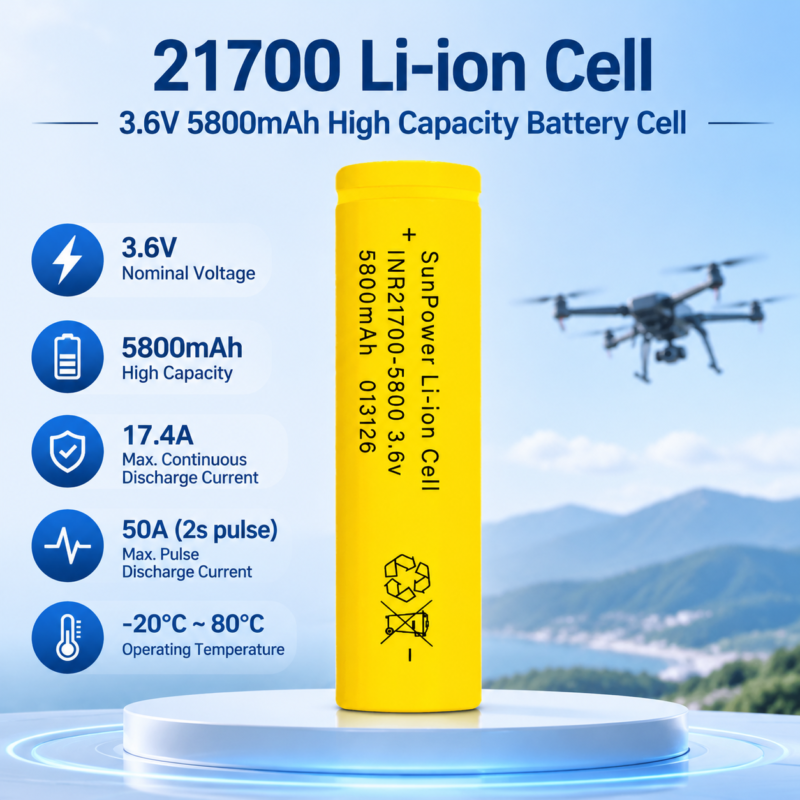
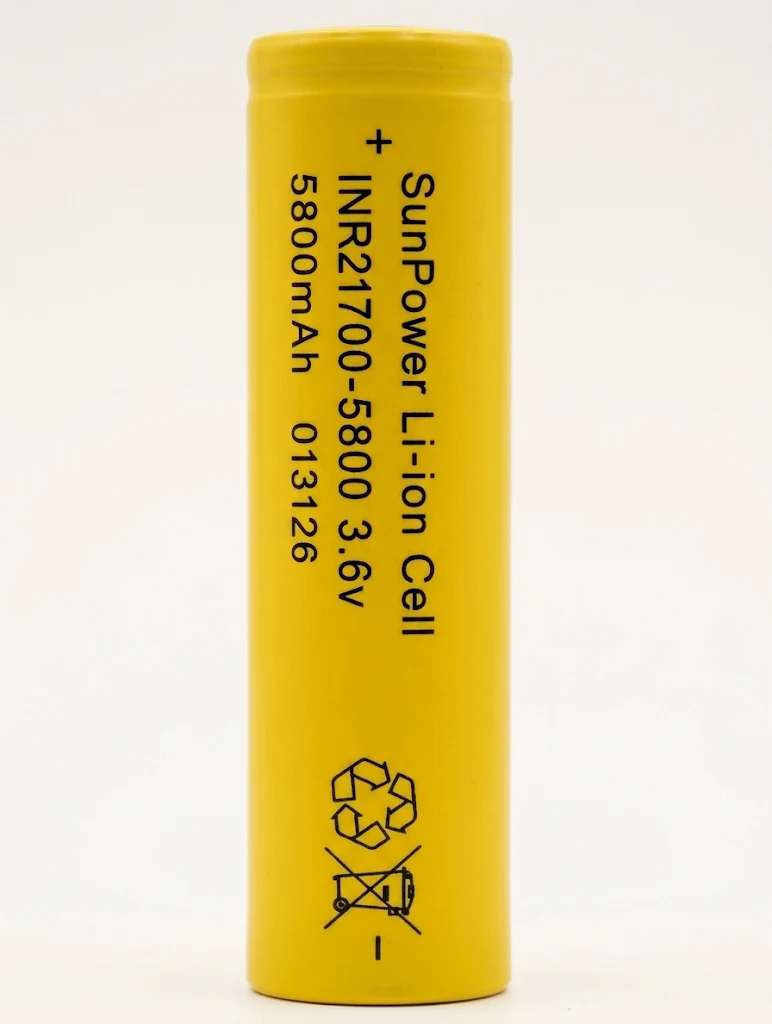
The Defond 21700-58E lithium-ion cell offers a nominal voltage of 3.6V and a capacity of 5800mAh. It provides a practical starting point for manufacturers developing customized battery packs. Shenzhen Defond Technology Co., Ltd. combines cell development, BMS technology, and PACK manufacturing to support integrated battery solutions for different applications.
What Makes the 21700 Rechargeable Battery Pack Cell Different?
The 21700 battery format provides a cylindrical cell platform for high-capacity lithium-ion battery designs. When you select cells for a rechargeable battery pack, you need to consider more than physical dimensions. Capacity, continuous discharge current, pulse discharge capability, and temperature tolerance also affect the final configuration.
The Defond 21700-58E is designed around the following specifications:
| Specification | 21700-58E |
|---|---|
| Cell Model | 21700-58E |
| Cell Type | Lithium-ion |
| Nominal Voltage | 3.6V |
| Rated Capacity | 5800mAh |
| Operating Temperature | -20°C to 80°C |
| Max. Continuous Discharge Current | 17.4A |
| Max. Pulse Discharge Current | 50A (2 seconds) |
These specifications help you evaluate whether the cell meets your equipment’s power requirements before designing a complete battery system.
High Capacity for Extended Operating Requirements
With a rated capacity of 5800mAh, the 21700-58E provides a substantial capacity base for customized battery configurations. This can help battery designers balance energy requirements, available installation space, and overall system weight.
However, actual battery runtime depends on the connected equipment’s power consumption, battery configuration, operating conditions, and energy conversion efficiency.
Stable Discharge Performance Under Different Conditions
The cell supports a maximum continuous discharge current of 17.4A and a maximum pulse discharge current of 50A for two seconds. These values provide useful reference points when evaluating power requirements for equipment with different load profiles.
Its specified ambient operating temperature range of -20°C to 80°C also gives engineers a reference for assessing environmental compatibility. You should still validate the complete battery system under its intended operating conditions.
How to Choose Cells for a Custom 21700 Rechargeable Battery Pack
Selecting a suitable cell is only the first step. You also need to consider the electrical configuration, battery management system, and mechanical design of the final PACK.
Follow these steps when developing your battery solution:
- Define your application requirements. Identify the equipment type, operating voltage, required capacity, continuous current, peak current, and installation space.
- Select the appropriate cell. Compare the 21700-58E specifications with your application’s energy and discharge requirements. Confirm that the cell meets your design targets.
- Determine the battery configuration. Engineers can evaluate series and parallel arrangements according to the required voltage and capacity. For example, a 2S1P configuration using two 3.6V nominal cells provides a nominal pack voltage of 7.2V, while a 1S2P configuration provides 3.6V with a combined nominal capacity of 11600mAh.
- Integrate the BMS. Select a battery management system that supports the required voltage, current protection, temperature monitoring, and cell balancing functions.
- Test the complete PACK. Evaluate electrical performance, thermal behavior, protection functions, and charging compatibility before production.
This process helps you reduce design mismatches and develop a battery system that fits your equipment’s actual requirements.
21700 Lithium-Ion Cell vs. Custom Battery Pack
A 21700 cell and a complete rechargeable battery pack serve different purposes. Understanding their differences helps you identify the right purchasing option.
| Comparison | Individual 21700 Cell | Custom Battery Pack |
|---|---|---|
| Product Structure | Single cylindrical cell | Multiple cells and integrated components |
| Voltage | 3.6V nominal | Depends on configuration |
| Capacity | 5800mAh | Depends on cell quantity and arrangement |
| BMS | Not included as a complete pack system | Integrated according to design |
| Application | Battery manufacturing and assembly | Direct equipment power supply |
| Customization | Cell selection | Voltage, capacity, BMS, and structure |
If you manufacture battery-powered equipment, purchasing individual cells may suit your in-house assembly process. However, if you need a ready-to-integrate power solution, a customized PACK may better match your production requirements.
Why Choose Defond for 21700 Battery Solutions?
Shenzhen Defond Technology Co., Ltd. was founded in 2016 and specializes in integrated drone battery solutions covering cells, BMS, and PACK manufacturing.
Rather than focusing only on individual battery components, Defond develops solutions that connect cell performance with battery management and complete PACK integration.
Key capabilities include:
- Full-chain development: In-house integration of customized battery cells, self-developed chip-level BMS, and PACK manufacturing.
- Application-specific engineering: Battery solutions for consumer and industrial drone applications, including agriculture, power inspection, and emergency response.
- R&D capabilities: Technical collaboration and research resources supported by specialized laboratories and engineering teams.
- Quality management: ISO 9001 and ISO 14001 certified management systems.
- Production flexibility: Manufacturing capabilities supporting small-batch customization and larger production requirements.
- International experience: Products and solutions supplied to customers across more than 30 countries and regions.
For OEMs and equipment manufacturers, these capabilities can simplify communication between cell selection, BMS development, and final battery assembly.
Frequently Asked Questions
1. Is the 21700-58E a complete rechargeable battery pack?
No. The 21700-58E is an individual lithium-ion cell with a nominal voltage of 3.6V and a capacity of 5800mAh. It can serve as a component in a customized rechargeable battery pack, subject to electrical and mechanical design requirements.
2. Can 21700 5800mAh cells be used in drone battery packs?
They can be evaluated for drone battery applications. However, suitability depends on the drone’s voltage requirements, continuous and peak current demands, weight limitations, thermal conditions, and battery management design. You should validate these factors before selecting the final configuration.
3. Can Defond provide customized 21700 battery pack solutions?
Yes. Defond provides integrated battery development covering customized cells, chip-level BMS, and PACK manufacturing. You can submit your required voltage, capacity, discharge current, application, and target dimensions for an engineering assessment.
Conclusion
Selecting the right cell is the foundation of a reliable 21700 rechargeable battery pack. With its 3.6V nominal voltage, 5800mAh capacity, 17.4A continuous discharge current, and 50A two-second pulse discharge capability, the Defond 21700-58E offers a technical option for manufacturers developing customized lithium-ion battery systems.
Shenzhen Defond Technology Co., Ltd. combines cell development, BMS integration, and PACK manufacturing to support different drone and industrial battery requirements. By matching cell specifications with your equipment’s actual power demands, you can develop a more suitable battery solution for your application.
Request a Customized Battery Solution
Share your target voltage, capacity, discharge current, application, estimated order quantity, and dimensional requirements with Defond’s engineering team. Discuss 21700 cell selection, BMS integration, and custom PACK development. You can also request a technical assessment and quotation for your project.