
When your equipment demands rapid power delivery, choosing the right high discharge rate battery becomes essential for maintaining stable operation under heavy loads. A battery with insufficient discharge capability may struggle to support high-current applications, while an unsuitable cell can limit the performance of the entire battery system.
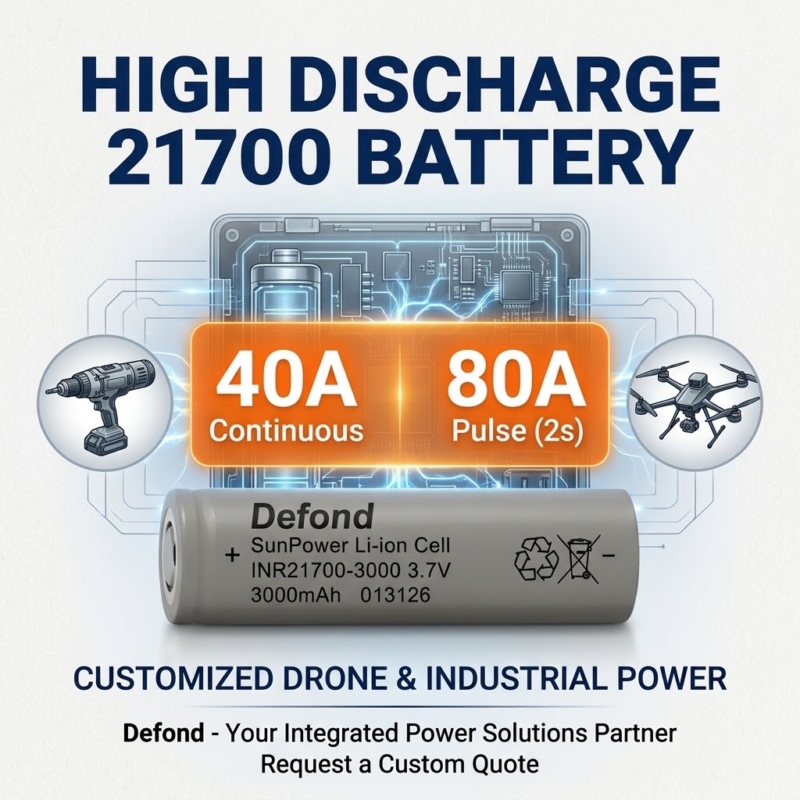
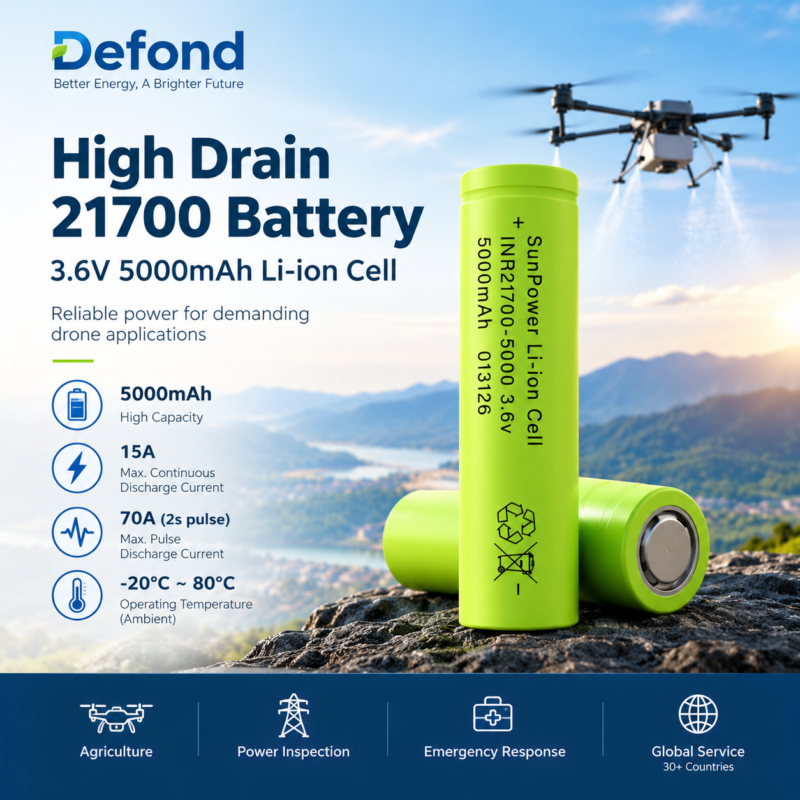
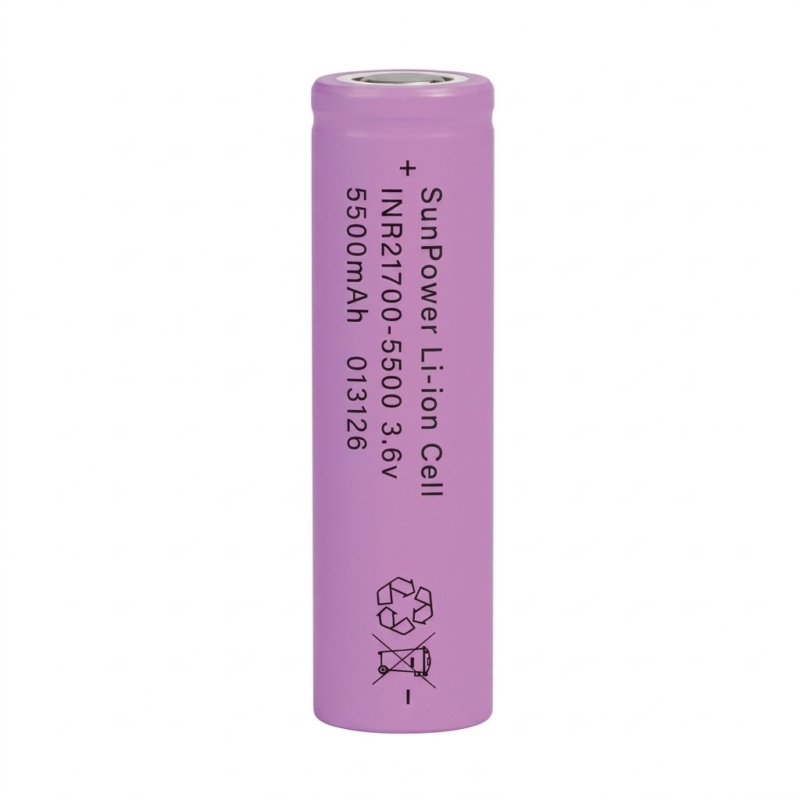
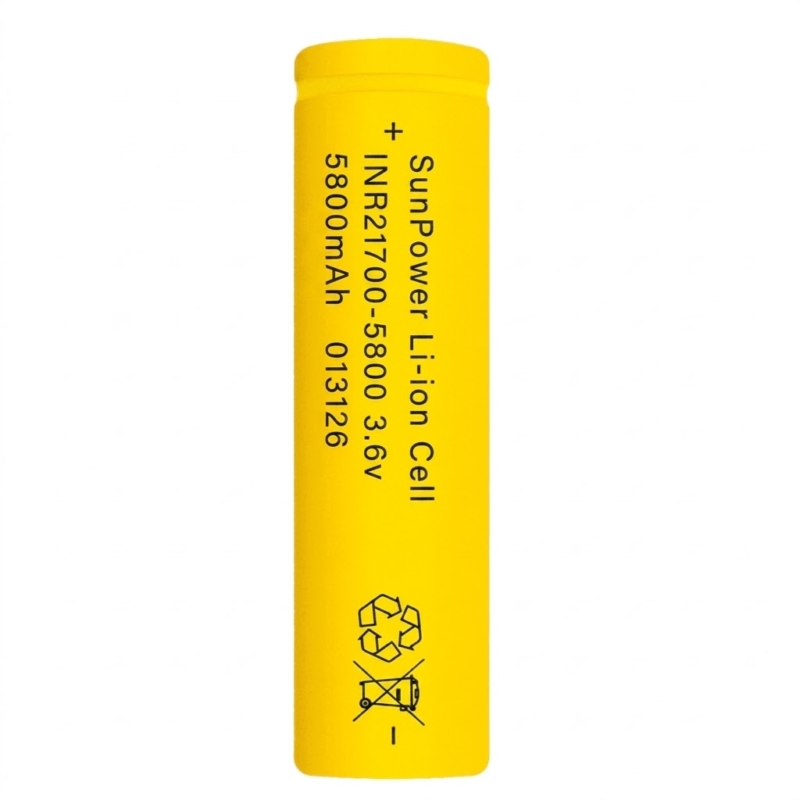
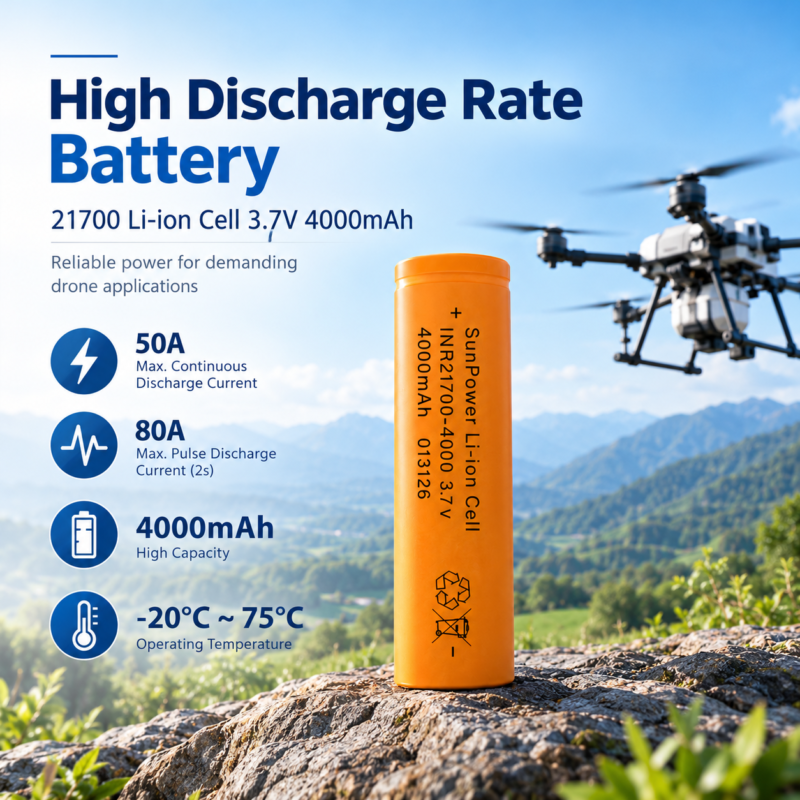
Defond offers a 21700 Li-ion cell designed for applications that require substantial current output in a cylindrical format. The 21700-40T model provides a nominal voltage of 3.7V, a capacity of 4000mAh, and a maximum continuous discharge current of 50A. Its pulse discharge rating reaches 80A for 2 seconds. These specifications give engineers a practical starting point when evaluating power requirements for drone systems, industrial equipment, and other high-current applications.
What Makes a High Discharge Rate Battery Suitable for High-Current Applications?
A high discharge rate battery supplies current to a connected device at the rate required by its electrical load. Engineers must evaluate discharge current alongside voltage, capacity, operating temperature, and system-level protection requirements.
For example, a drone power system may experience sudden current demand during acceleration, takeoff, or rapid changes in flight conditions. Selecting a suitable cell helps engineers evaluate whether the battery can support these demands within its specified operating limits.
Key specifications to consider include:
- Continuous discharge current: The current a cell can deliver continuously under its specified test conditions.
- Pulse discharge current: The current permitted for a limited period, subject to the manufacturer’s conditions.
- Battery capacity: The amount of electrical charge stored, expressed in ampere-hours or milliampere-hours.
- Operating temperature: The temperature range within which the manufacturer permits operation.
- Cell integration: Compatibility with the battery management system (BMS), interconnections, and thermal design.
These parameters should be assessed together rather than using capacity alone to determine whether a cell suits your application.
21700 Li-Ion Cell 3.7V 4000mAh: Technical Specifications
Defond’s 21700-40T is a cylindrical lithium-ion cell with a combination of 4000mAh capacity and high discharge current capability. Its specifications help engineers conduct an initial assessment before developing a complete battery pack.
| Specification | 21700-40T |
|---|---|
| Cell type | Cylindrical lithium-ion |
| Model | 21700-40T |
| Nominal voltage | 3.7V |
| Capacity | 4000mAh (4Ah) |
| Maximum continuous discharge current | 50A |
| Maximum pulse discharge current | 80A for 2 seconds |
| Ambient operating temperature | -20°C to 75°C |
The 50A continuous discharge rating and 80A short-duration pulse rating describe different operating conditions. You should not treat the pulse rating as a continuous operating limit or assume that every application can use the full rated current at every temperature.
Before selecting this cell, confirm the applicable datasheet, discharge test conditions, charging limits, and thermal requirements with Defond.

How to Evaluate a High Discharge 21700 Battery for Your Application
Choosing a suitable cell involves more than matching a product name to an equipment category. Follow these steps to assess your requirements.
- Calculate the load requirements. Determine the operating voltage, normal current draw, peak current, and duration of any current spikes. Include the power demands of all connected components.
- Check continuous and pulse ratings. Compare your measured load profile with the cell’s 50A continuous and 80A for 2 seconds pulse ratings. Maintain appropriate engineering margins and follow the manufacturer’s test conditions.
- Evaluate thermal performance. Consider ambient temperature, internal heat generation, enclosure design, cooling, and the temperature limits of the complete battery assembly.
- Plan the battery configuration. Determine the required series and parallel cell arrangement based on voltage, capacity, and current requirements. Account for cell matching, wiring resistance, and the limits of the BMS.
- Validate the complete system. Test the assembled battery under representative operating conditions. Check voltage stability, temperature rise, protection behavior, and performance during peak loads before deployment.
This process helps you identify compatibility issues early and reduces the risk of choosing a cell that cannot meet your actual load profile.
High Discharge Rate Battery vs. Standard Lithium-Ion Cell
A comparison of discharge specifications can help you decide which type of cell to evaluate for your project.
| Evaluation factor | High-discharge cell | Standard lithium-ion cell |
|---|---|---|
| Current demand | Intended for applications requiring high current within rated limits | Depends on the individual model’s discharge rating |
| Pulse loads | Requires verification of permitted pulse current and duration | Must be checked against the cell’s pulse specifications |
| Thermal management | Requires careful assessment under high-current operation | Also requires thermal evaluation |
| Selection priority | Discharge capability, voltage stability, and system compatibility | Application-specific balance of capacity, current, and cost |
These are general selection considerations, not universal performance claims. Some standard lithium-ion cells also support high discharge currents, so compare actual datasheets instead of relying on product category labels.
Why Choose Defond for Lithium-Ion Battery Solutions?
Shenzhen Defond Technology Co., Ltd. specializes in integrated drone battery solutions covering cells, battery management systems, and PACK manufacturing. Founded in 2016 and headquartered in Shenzhen, the company supports customized battery development for consumer and industrial drone applications.
Defond’s stated capabilities include:
- Full-chain development: Cell, BMS, and PACK integration to support system compatibility.
- Custom engineering: Development support based on project-specific voltage, current, capacity, and application requirements.
- Quality management: ISO 9001 and ISO 14001 certifications, as reported by the company.
- International experience: Solutions supplied to customers across more than 30 countries and regions.
- Application experience: Battery solutions for agriculture, power inspection, and emergency response.
For buyers evaluating a high discharge rate battery, these capabilities provide a starting point for discussing cell selection, protection strategies, and complete battery system requirements. Confirm product-specific certifications, test reports, and customization options during technical review.
FAQ
1. What is the maximum discharge current of the Defond 21700-40T cell?
The specified maximum continuous discharge current is 50A. Its maximum pulse discharge current is 80A for 2 seconds. Actual allowable operation depends on the manufacturer’s conditions and the design of the complete battery system.
2. Is a 4000mAh 21700 cell suitable for drone applications?
It may be suitable for some applications, but capacity alone does not establish compatibility. You should evaluate voltage, continuous and peak current demand, weight, thermal performance, flight-time requirements, and BMS protection before making a selection.
3. Can Defond supply a customized high discharge rate battery pack?
Defond describes its business as covering cells, BMS, and PACK manufacturing, with customized development for drone projects. Contact the company with your required voltage, capacity, discharge current, dimensions, and application details to confirm available configurations.
Conclusion
Selecting the right high discharge rate battery requires a clear understanding of your equipment’s current demand, operating environment, and system protection requirements. Defond’s 21700-40T lithium-ion cell combines a 3.7V nominal voltage, 4000mAh capacity, 50A maximum continuous discharge current, and 80A pulse discharge capability for 2 seconds. Use these specifications as an initial reference, then verify the applicable datasheet and validate the complete system before deployment.
Request a Technical Evaluation from Defond
Share your application, target voltage, required capacity, peak current, operating temperature, and estimated order quantity through the 21700 Li-ion Cell product enquiry page. Defond team can review your requirements and help determine whether the 21700-40T cell or a customized cell-to-PACK solution fits your project.