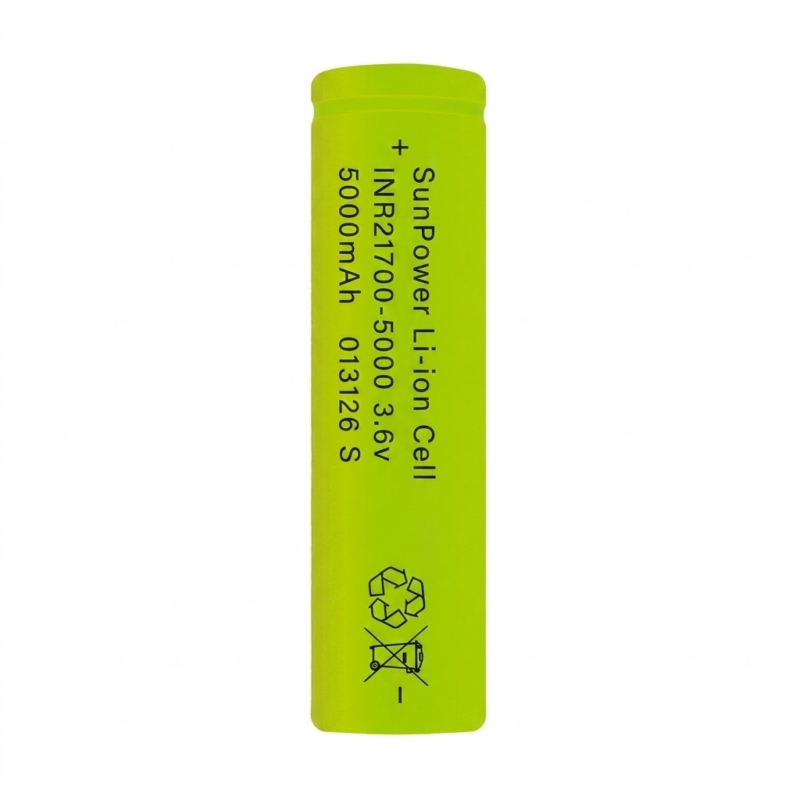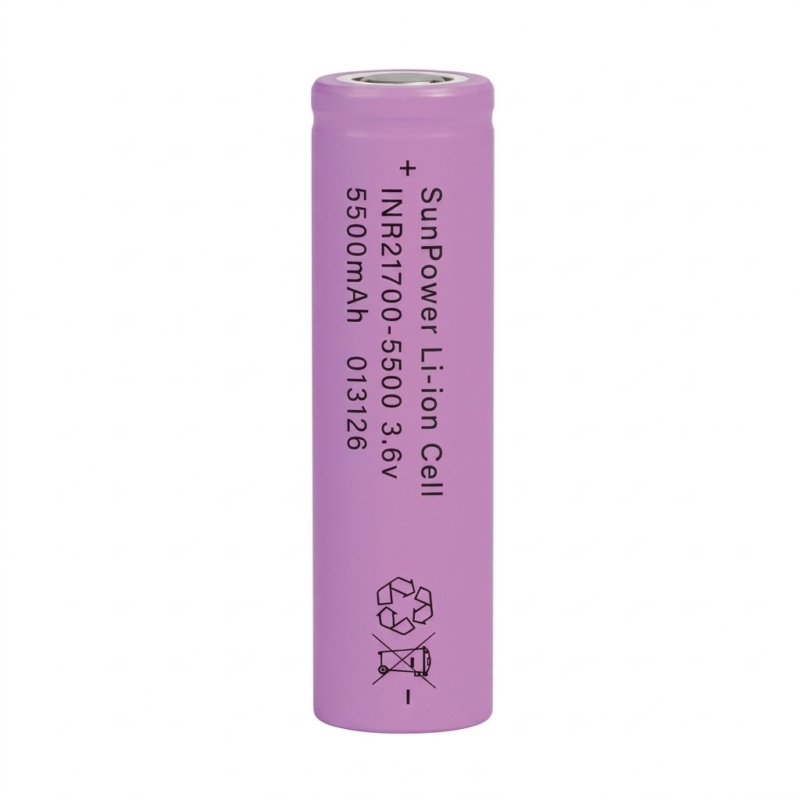

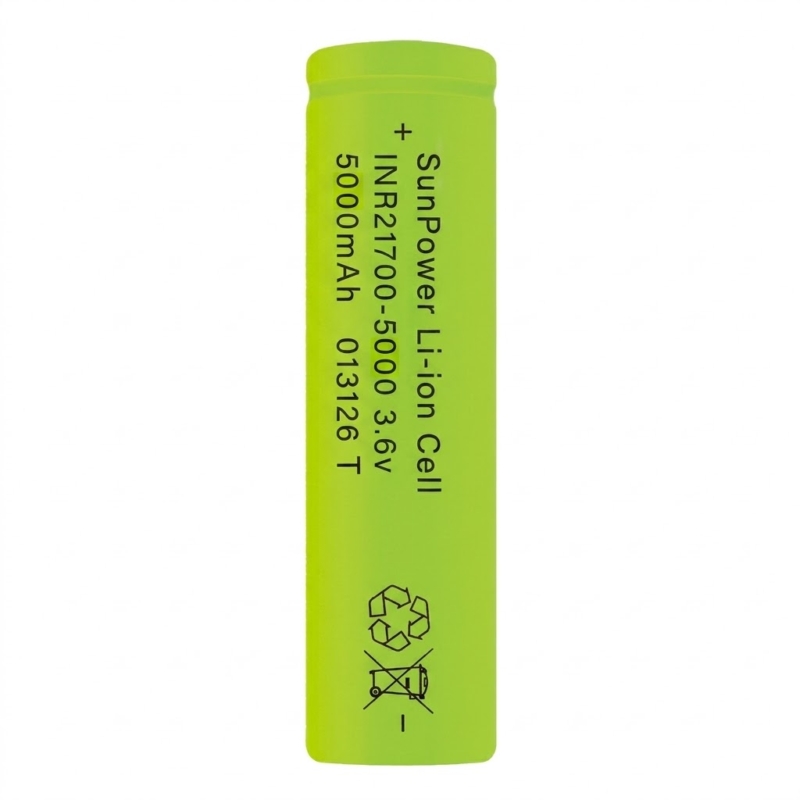
Choosing the right 21700 series battery requires more than comparing capacity figures. You need to consider discharge current, operating temperature, cell dimensions, and compatibility with your battery system. An unsuitable cell may limit equipment performance or create integration challenges during product development.
The 21700 cylindrical battery format offers a practical option for applications that require rechargeable lithium-ion cells with substantial capacity and current output. Shenzhen Defond Technology Co., Ltd. offers a 21700 Li-ion cell rated at 3.6V and 5000mAh, model 21700-50T. With a maximum continuous discharge current of 20A and a pulse discharge current of 90A for two seconds, this cell provides defined electrical parameters for engineering evaluation. Understanding these specifications helps you determine whether the cell fits your equipment, operating conditions, and power requirements.
What Is a 21700 Series Battery?
A 21700 series battery refers to a cylindrical lithium-ion cell format commonly identified by its nominal dimensions of approximately 21mm in diameter and 70mm in length. Unlike a complete battery pack, a single cell does not automatically include a battery management system (BMS), protective enclosure, or external wiring.
For product developers, this distinction matters. You can evaluate individual cells for integration into a custom battery pack, but you must also consider electrical protection, thermal management, mechanical support, and system-level testing.
Typical considerations when selecting a 21700 lithium-ion cell include:
- Capacity: Determines the nominal charge available from the cell.
- Voltage: Must match the requirements of your equipment and battery configuration.
- Discharge current: Determines whether the cell can support the required load.
- Temperature range: Helps establish suitability for the intended environment.
- Integration requirements: Influence the BMS, cell arrangement, enclosure, and charging design.
21700 Li-ion Cell 3.6V 5000mAh Specifications
The Defond 21700-50T is a lithium-ion cylindrical cell designed around specific voltage, capacity, and discharge ratings. Review the following specifications before selecting it for your project.
| Parameter | Specification |
|---|---|
| Model | 21700-50T |
| Cell chemistry | Lithium-ion |
| Nominal voltage | 3.6V |
| Rated capacity | 5000mAh (5Ah) |
| Maximum continuous discharge current | 20A |
| Maximum pulse discharge current | 90A for 2 seconds |
| Ambient operating temperature | -20°C to 60°C |
These figures provide a starting point for electrical design and supplier evaluation. However, confirm the manufacturer’s complete datasheet for additional details, including charging limits, cell dimensions, internal resistance, cycle life, and test conditions.
Understanding the 20A Continuous and 90A Pulse Ratings
The 20A continuous discharge rating describes the stated maximum current under the manufacturer’s specified conditions. The 90A pulse rating applies only to a two-second pulse, so you should not treat it as a continuous operating current.
Before using this 21700 high-discharge battery in a real product, check the load profile, pulse frequency, cooling conditions, and allowable cell temperature. Your BMS, conductors, connectors, and protection devices must also support the intended current safely.
The nominal energy can be estimated using voltage multiplied by capacity:
3.6V × 5Ah = 18Wh per cell
Actual usable energy depends on discharge conditions, temperature, voltage limits, and system efficiency.
21700 Cylindrical Battery vs. 18650 Battery
Both formats serve rechargeable lithium-ion applications, but their dimensions and capacity requirements can influence your design. The following comparison highlights general format differences rather than guaranteeing the performance of every cell.
| Comparison factor | 21700 cylindrical cell | 18650 cylindrical cell |
|---|---|---|
| Nominal dimensions | Approximately 21 × 70mm | Approximately 18 × 65mm |
| Space requirement | Larger individual cell | Smaller individual cell |
| Capacity selection | Depends on the specific model | Depends on the specific model |
| Current capability | Depends on cell design and ratings | Depends on cell design and ratings |
| Design considerations | Cell spacing, pack volume, and cooling | Cell count, pack volume, and cooling |
A 21700 cell may suit designs that prioritize capacity per cell or require a particular current rating. An 18650 cell may fit existing equipment or packaging constraints more easily. Compare verified datasheets and complete-pack performance instead of choosing solely by format.

How to Select a 21700 Series Battery for Your Project
Use the following steps to evaluate the Defond 5000mAh cell for your application.
- Calculate your energy requirement. Estimate operating power, runtime, and energy consumption. Use the nominal 18Wh figure as a reference, not a guarantee of usable energy.
- Determine continuous and peak current. Check the normal load and transient peaks separately. Confirm that the application’s current profile remains within the cell’s specified limits.
- Check the temperature environment. Compare expected ambient and cell temperatures with the stated -20°C to 60°C operating range. Ask the supplier to confirm any charging-temperature limits separately.
- Design the battery configuration. Determine the required series and parallel cell arrangement based on voltage, capacity, current, and available space. Include appropriate BMS protection and thermal considerations.
- Validate the complete system. Test charging, discharging, temperature rise, protection functions, and performance under representative operating conditions before deployment.
Potential Applications of 21700 Lithium-Ion Cells
A 21700 lithium-ion cell may support equipment that needs a combination of capacity and discharge capability. Potential applications depend on the verified cell characteristics and the design of the final battery system.
Examples include:
- Portable industrial equipment: Where available volume and current demand influence cell selection.
- Power tools and electrical equipment: Where the load profile requires careful evaluation of continuous and transient current.
- Custom battery packs: Where engineers configure individual cells to meet specific voltage and capacity requirements.
- Selected drone power systems: Where weight, discharge performance, vibration, and thermal behavior must be validated against flight requirements.
For drone applications in particular, do not assume that a general-purpose 21700 cell automatically meets flight-battery requirements. Confirm discharge curves, pack weight, vibration resistance, thermal performance, and applicable transport and safety requirements.
Why Evaluate Defond as Your Battery Supplier?
Shenzhen Defond Technology Co., Ltd., founded in 2016, develops battery solutions covering cells, battery management systems, and PACK manufacturing. The company supports customized battery development for consumer and industrial drone applications, including agriculture, power inspection, and emergency response.
Its stated capabilities include:
- Full-chain development: Cell, BMS, and PACK integration.
- Quality management: ISO 9001 and ISO 14001 certifications, as stated by the company.
- Custom engineering: Development support for different battery configurations and application requirements.
- International experience: Service to customers across more than 30 countries and regions.
When evaluating a supplier, request the relevant datasheet, certification documentation, sample availability, customization scope, and production lead time. These details help you assess technical suitability before committing to a production order.
FAQ
1. What is the capacity of the Defond 21700-50T battery cell?
The stated rated capacity is 5000mAh (5Ah), with a nominal voltage of 3.6V. Its estimated nominal energy is 18Wh per cell.
2. Can the 21700-50T deliver 90A continuously?
No. The stated maximum continuous discharge current is 20A, while 90A is specified for a two-second pulse. Follow the manufacturer’s operating conditions and obtain the full datasheet before designing around these limits.
3. Can Defond customize a 21700 battery pack?
Defond provides integrated battery development covering cells, BMS, and PACK manufacturing. Contact the company with your voltage, capacity, current, dimensions, application, and estimated order quantity to determine the available customization options.
Conclusion
The 21700 series battery is worth evaluating when your design requires a cylindrical lithium-ion cell with defined capacity and discharge ratings. Defond’s 21700-50T offers a stated 3.6V nominal voltage, 5000mAh capacity, 20A maximum continuous discharge current, and 90A two-second pulse rating. By checking the complete datasheet, validating thermal and electrical requirements, and testing the final configuration, you can make a more informed decision for your equipment or custom battery project.
Request a Technical Quote from Defond
Visit the Defond 21700 Li-ion cell product page to submit your requirements. Include your target voltage, capacity, discharge profile, operating temperature, application, and estimated quantity so the team can assess whether the cell fits your project.