

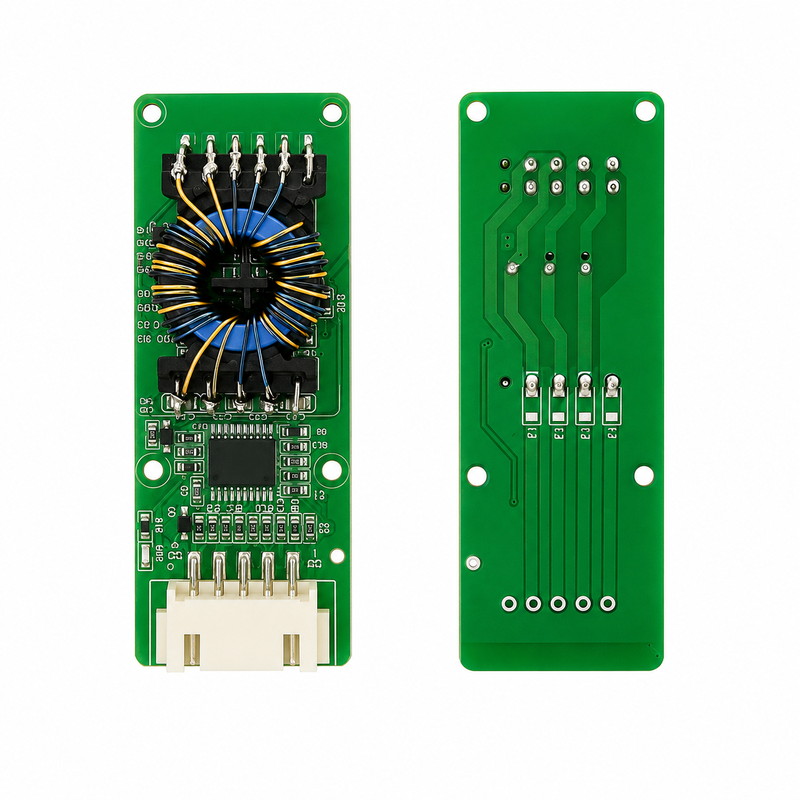
4S active balancing module is essential when your drone battery pack shows uneven cell voltage, reduced flight time, or unstable discharge behavior. In UAV systems, even a small imbalance between cells can directly reduce endurance and compromise mission reliability.
You need a solution that does more than basic protection. You need real-time energy balancing that works under vibration, temperature changes, and high discharge loads typical in drone operations.
Defond Technology designs integrated battery systems covering cells, BMS, and PACK solutions. With full-chain R&D capability and global deployment experience across UAV applications, the company focuses on stable, efficient, and long-cycle-life energy systems for demanding environments.
What is a 4S Active Balancing Module?
A 4S active balancing module is designed for 4-series lithium battery packs commonly used in drones, robotics, and portable energy systems.
Unlike passive balancing, which wastes excess energy as heat, active balancing redistributes energy between cells, improving efficiency and battery lifespan.
Core functions include:
- Real-time voltage monitoring across all cells
- Active energy transfer between high and low voltage cells
- Prevention of overcharge and deep discharge
- Continuous balancing during charge and discharge cycles
Why Drone Systems Need Active Balancing
In UAV applications, battery performance directly affects flight stability and safety. Without active balancing, cell differences increase over time, reducing usable capacity.
Common problems without balancing:
- Shortened flight time
- Uneven battery degradation
- Voltage collapse under load
- Increased thermal stress
With 4S active balancing module:
- Stable cell voltage distribution
- Improved energy efficiency
- Longer battery cycle life
- Safer discharge performance
Defond Technology develops balancing systems specifically optimized for UAV power demands, ensuring consistent performance in real-world conditions.

Passive vs Active Balancing Comparison
| Feature | Passive Balancing | 4S Active Balancing Module |
|---|---|---|
| Energy Efficiency | Low | High |
| Heat Generation | High | Low |
| Balancing Speed | Slow | Fast |
| Battery Life Impact | Moderate | Significant improvement |
| UAV Suitability | Limited | Ideal |
Active balancing is increasingly preferred in modern drone battery architectures due to its efficiency advantages.
How the 4S Active Balancing System Works
Defond Technology integrates chip-level control with inductive balancing architecture to manage energy flow dynamically.
Working process:
- Detect voltage of each cell in real time
- Identify imbalance across the 4S pack
- Transfer energy from higher voltage cells to lower ones
- Adjust balancing current dynamically
- Maintain equilibrium during operation
This closed-loop system ensures your UAV battery pack remains stable even during high-load missions.
Technical Advantages from Defond Technology
Defond Technology focuses on full-chain battery development (Cell + BMS + PACK), ensuring system-level compatibility and performance optimization.
Engineering advantages:
- Chip-level BMS architecture design
- Inductive active balancing technology
- Optimized for UAV vibration and load conditions
- High consistency in multi-cell battery packs
- Fast customization for OEM/ODM projects
Manufacturing capability:
- ISO9001 & ISO14001 certified production system
- Advanced battery testing and validation processes
- Global UAV battery deployment experience
- Scalable production from prototypes to mass manufacturing
Application Scenarios
The 4S active balancing module is widely used in:
- Agricultural UAV battery systems
- Power inspection drones
- Emergency rescue UAV platforms
- Lightweight industrial drone systems
- Robotics and mobile energy packs
Each application requires stable voltage output and reliable energy distribution, which active balancing ensures.
How to Integrate the Module into Your Battery System
Step-by-step integration process:
- Define 4S lithium battery configuration
- Connect balancing module to each cell line
- Integrate with BMS control system
- Install temperature sensing (NTC interface)
- Run calibration and system validation
- Test under charge and discharge cycles
Defond Technology provides technical support for system integration and customization.
FAQ
1. What battery types are compatible with a 4S active balancing module?
It is compatible with 4-series lithium-ion and LiFePO4 battery packs used in UAV and energy systems.
2. Does active balancing improve drone flight time?
Yes. By maximizing usable capacity across all cells, it improves overall energy efficiency and extends flight duration.
3. Can this module be customized for industrial drones?
Yes. Defond Technology supports OEM and ODM customization for different UAV and energy storage applications.
Conclusion
If your UAV system suffers from unstable voltage, reduced efficiency, or uneven cell aging, upgrading to a 4S active balancing module is a practical and high-impact solution. It improves energy utilization, stabilizes discharge behavior, and extends overall battery life in demanding drone environments.
Defond Technology provides integrated battery solutions (Cell + BMS + PACK) designed for UAV applications worldwide. With strong engineering capability and scalable manufacturing, the company supports both prototype development and mass production needs.
If you are developing or upgrading drone battery systems, contact Defond Technology to request technical documentation, customization support, or BMS integration consultation.