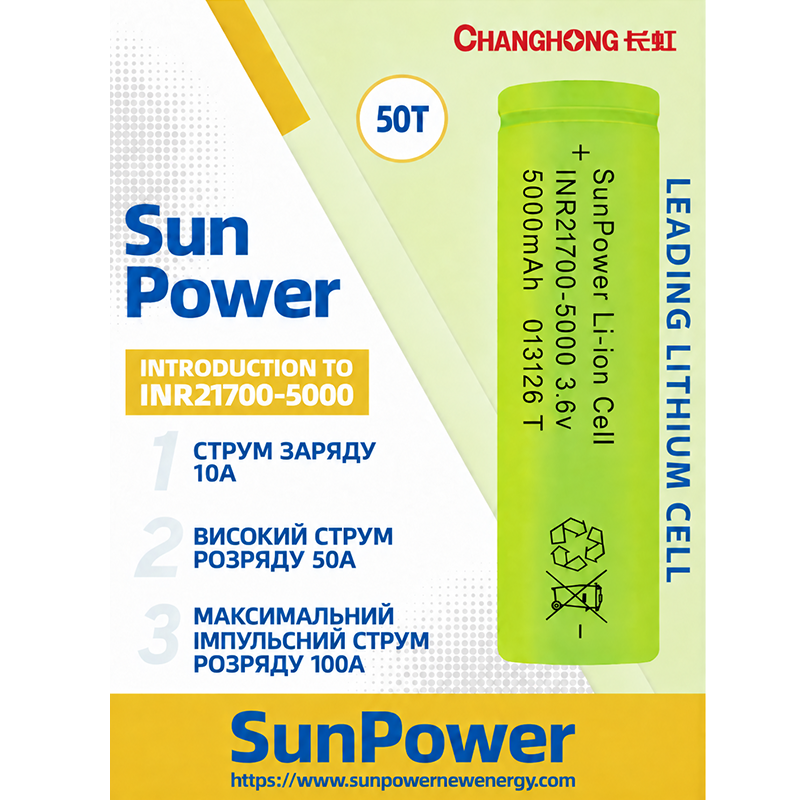

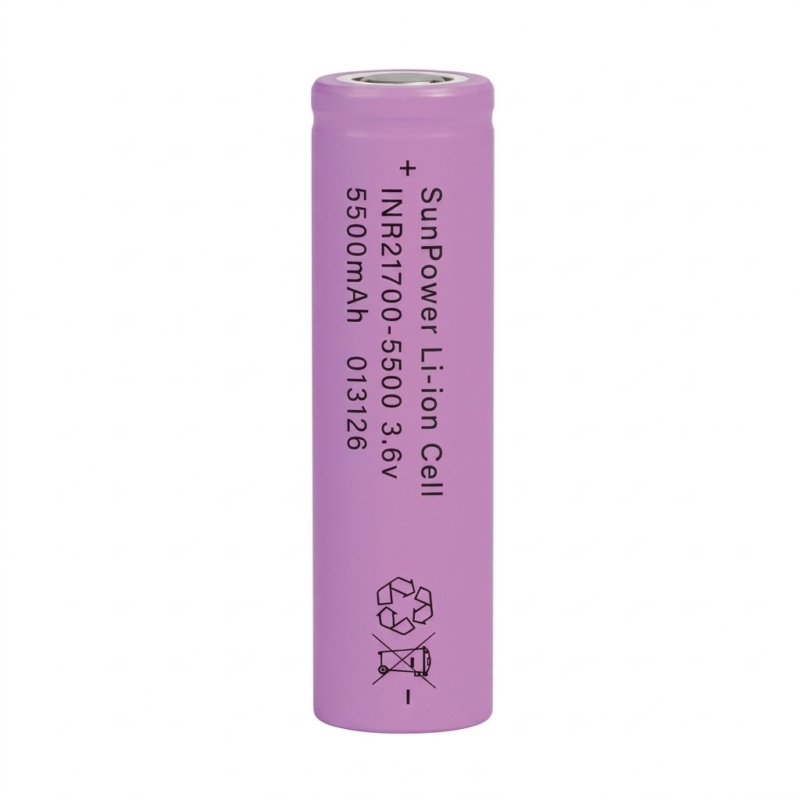
21700 battery cells offer a practical option when you need a balance of capacity, discharge performance, and compact cylindrical construction. However, choosing the right cell requires more than comparing capacity ratings. You also need to evaluate operating temperature, continuous discharge current, pulse current, and compatibility with your battery system.
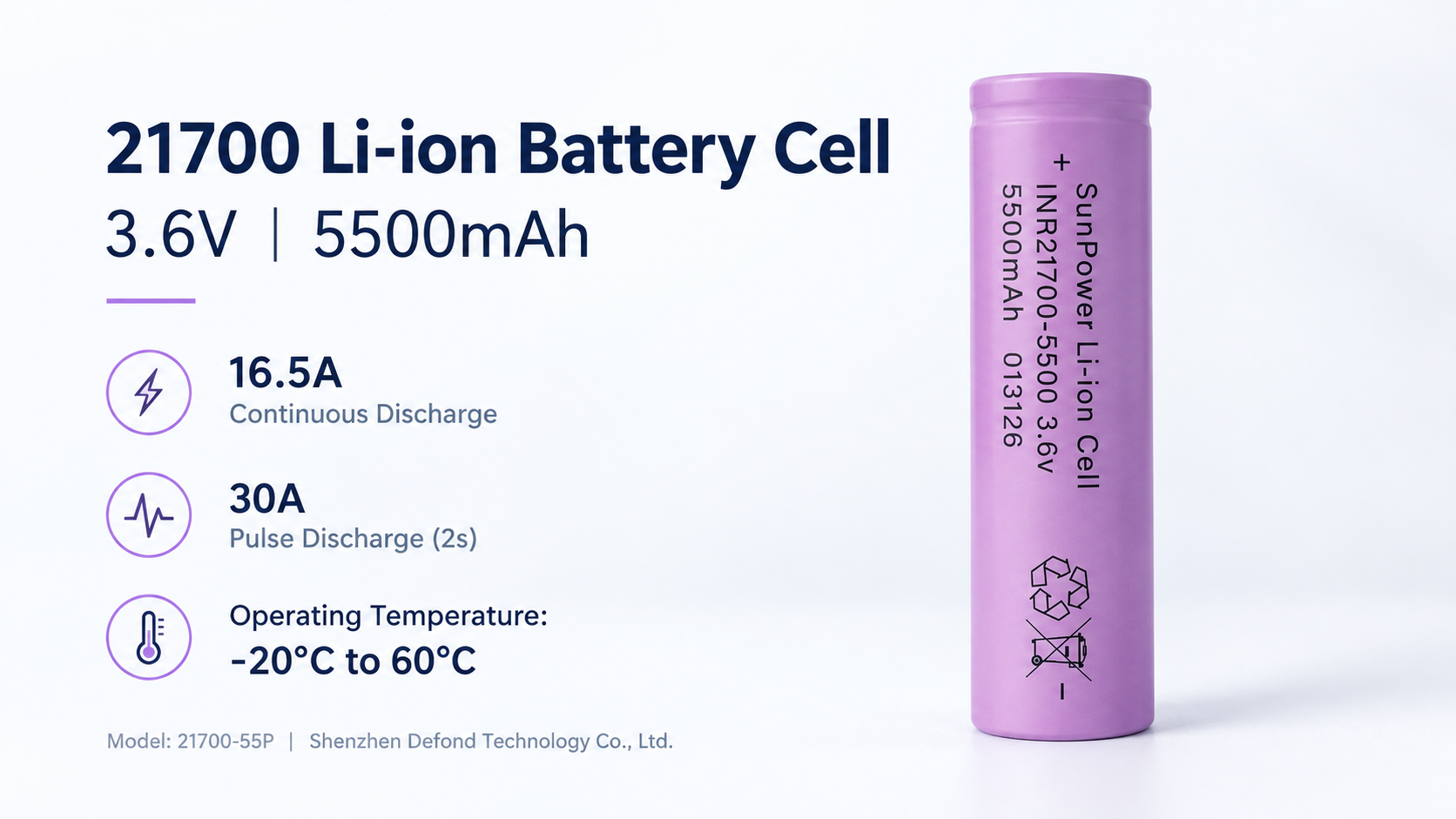
The 21700 Li-ion Cell 3.6V 5500mAh, model 21700-55P, from Shenzhen Defond Technology Co., Ltd. provides a specified capacity of 5500mAh, a nominal voltage of 3.6V, and a maximum continuous discharge current of 16.5A. Its operating temperature range extends from -20°C to 60°C, while its maximum pulse discharge current reaches 30A for two seconds. These specifications help you assess whether the cell suits your equipment and battery design requirements.
Key Specifications of the 21700 Battery Cell
Before integrating a lithium-ion cell into your equipment, check its electrical ratings and operating limits against your application requirements.
| Parameter | Specification |
|---|---|
| Model | 21700-55P |
| Cell type | Lithium-ion |
| Nominal voltage | 3.6V |
| Rated capacity | 5500mAh |
| Maximum continuous discharge current | 16.5A |
| Maximum pulse discharge current | 30A for 2 seconds |
| Operating temperature | -20°C to 60°C |
| Cell format | 21700 cylindrical |
The 5500mAh capacity indicates the rated charge capacity of the cell. Actual runtime depends on the equipment’s power consumption, discharge conditions, temperature, and battery configuration.
Likewise, the 16.5A continuous discharge rating and 30A two-second pulse rating serve different purposes. You should not treat the pulse rating as a continuous operating current or assume that every application can safely use the maximum ratings under all conditions.
Why Choose 21700 Lithium-Ion Cells?
Capacity and Cylindrical Design
A 21700 cylindrical lithium-ion cell provides a standardized physical format for battery system design. Compared with cells of different dimensions, this format gives engineers a consistent starting point for evaluating available space, electrical configuration, and potential pack capacity.
With a rated capacity of 5500mAh, the 21700-55P is worth evaluating for equipment that requires substantial capacity from an individual cell. However, overall pack capacity and runtime depend on the number of cells, series-parallel configuration, and system-level power requirements.
Discharge Performance for Power Demands
When your equipment experiences changing power demands, continuous and pulse discharge ratings help determine whether a cell can support the required load.
The 21700-55P specifies:
- 16.5A maximum continuous discharge current for evaluating sustained electrical loads.
- 30A maximum pulse discharge current for 2 seconds for assessing brief peak-load requirements.
- -20°C to 60°C operating temperature for checking environmental compatibility.
Before deployment, confirm the manufacturer’s discharge conditions, temperature limits, protection requirements, and applicable test data. These checks are particularly important when designing battery packs for equipment exposed to variable workloads or outdoor conditions.
Applications and Selection Considerations
The right cell depends on your equipment’s energy demand, physical constraints, and operating environment. The 21700-55P can be evaluated for suitable portable equipment, industrial devices, and battery pack projects, provided the electrical and thermal requirements match its specifications.
For drone applications, however, you should verify the cell’s weight, power-to-weight ratio, vibration resistance, and suitability for the intended flight profile before selecting it. The published specifications alone do not establish compatibility with every drone platform.
Comparing Battery Cell Options
Use the following table to understand which specifications deserve attention when comparing candidate cells.
| Selection factor | 21700-55P specification | What you should evaluate |
|---|---|---|
| Capacity | 5500mAh | Expected runtime and energy demand |
| Nominal voltage | 3.6V | Compatibility with system voltage |
| Continuous discharge | Up to 16.5A | Sustained load requirements |
| Pulse discharge | Up to 30A for 2 seconds | Short-duration peak loads |
| Operating temperature | -20°C to 60°C | Actual environmental conditions |
This comparison uses the published 21700-55P ratings rather than unverified competitor specifications. For a meaningful product comparison, request equivalent test conditions and discharge curves for each candidate cell.
How to Select and Integrate 21700 Battery Cells
Follow these steps before placing an order or incorporating the cell into your design.
- Calculate your power requirements. Determine the equipment’s operating voltage, typical current, peak current, and expected runtime.
- Check capacity and configuration. Estimate the number of cells required and calculate the proposed series-parallel arrangement.
- Verify thermal conditions. Confirm that the expected operating environment remains within the cell’s specified limits and that your design provides adequate heat management.
- Plan battery management and protection. Evaluate overcharge, over-discharge, overcurrent, short-circuit, and temperature protection requirements for the complete battery system.
- Request technical documentation. Ask Shenzhen Defond Technology Co., Ltd. for relevant discharge curves, dimensional drawings, safety documentation, and application-specific recommendations before finalizing your design.
These steps help you move from a basic specification comparison to a more informed battery selection decision.
Why Work with Shenzhen Defond Technology Co., Ltd.?
Shenzhen Defond Technology Co., Ltd. specializes in integrated drone battery solutions covering customized cells, chip-level battery management systems (BMS), and PACK manufacturing. Founded in 2016, the company supports battery development for consumer and industrial drone applications.
Its stated capabilities include full-chain integration, custom development, and production support. The company also identifies ISO 9001 and ISO 14001 as certifications for its quality and environmental management systems.
When sourcing 21700 battery cells, you can discuss your required capacity, discharge profile, operating temperature, order quantity, and intended application with the supplier. For customized projects, clarify whether the requested cell can meet your electrical requirements and whether additional BMS and PACK development is necessary.
FAQ
1. What is the capacity of the 21700-55P cell?
The 21700-55P has a rated capacity of 5500mAh and a nominal voltage of 3.6V. Actual usable capacity depends on discharge conditions and the equipment’s operating requirements.
2. What is its maximum discharge current?
The cell specifies a maximum continuous discharge current of 16.5A and a maximum pulse discharge current of 30A for 2 seconds. Follow the manufacturer’s specified operating conditions when designing your application.
3. Can the 21700-55P be used in drone battery packs?
It may be considered for a drone battery project if its weight, current capability, energy requirements, and thermal characteristics match the design. Confirm cell-level suitability, pack configuration, BMS compatibility, and relevant safety requirements with the supplier before integration.
Conclusion
Choosing 21700 battery cells requires careful evaluation of capacity, discharge current, operating temperature, and system compatibility. The Shenzhen Defond Technology Co., Ltd. 21700-55P offers a specified 5500mAh capacity, 3.6V nominal voltage, 16.5A continuous discharge rating, and 30A two-second pulse rating. By matching these parameters to your equipment and verifying the supporting technical documentation, you can make a more informed decision for your next lithium-ion battery project.
CTA
Contact Shenzhen Defond Technology Co., Ltd. to request technical specifications, confirm application compatibility, and discuss your cell sourcing or customized battery development requirements. Provide your target voltage, current profile, operating temperature, and estimated order quantity to help the team assess your project.